
Sewer problems
Tree roots in sewer lines
Updated · Editorial team; not yet technically reviewed
Short answer
Roots find sewer lines through joints and cracks, drawn by moisture and nutrients, then grow into a mat that catches paper and grease. Cutting or jetting clears them, but they grow back from the same entry points, so lasting fixes seal the pipe: lining, spot repairs or replacing the section with jointless or tightly sealed pipe.
How roots get in
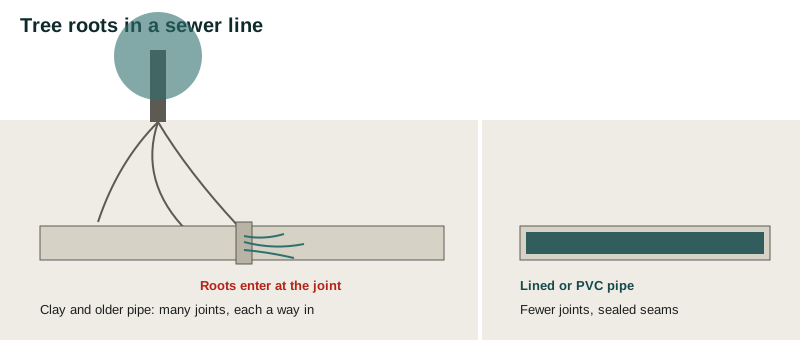
Clay and older pipe was laid in short sections, with a joint every few feet. As joints age or shift, they leak moisture and vapor that roots follow. Once a fine root gets in, it thickens and branches inside the pipe.
Signs of root intrusion
- Slow drains throughout the house that clear, then return within months.
- Gurgling toilets, especially in spring and summer growth seasons.
- A main line clog with no obvious cause like grease or wipes.
- Sinkholes or unusually lush patches in the yard along the line.
Removal and repair options
| Option | What it does | How long it lasts |
|---|---|---|
| Cable root cutting | Opens the line | Months to a year or two |
| Hydro jetting | Clears roots and debris from the walls | Longer than cutting, but roots return |
| Root treatment (foaming herbicide) | Kills roots in the pipe to slow regrowth | Usually needs repeating |
| Pipe lining | Seals joints from inside | Long-term |
| Section replacement | Replaces damaged pipe with sealed pipe | Long-term |
Preventing roots from coming back
Cutting roots clears the pipe, but the cracks and joints that let them in remain, so roots usually return within one to two years. Foaming root killers applied by a plumber can slow regrowth between cleanings; they are a maintenance tool, not a repair. Lining the pipe or replacing the damaged section with jointless pipe is the permanent fix, and a camera inspection after cleaning shows where the entry points are.
When planting, keep fast-growing, water-seeking trees such as willows, silver maples and poplars well away from the sewer route, and favor smaller, slower-growing species near the line. Your plumber can locate and mark the lateral from the camera head so you know where it runs. If the tree belongs to the city or a neighbor, ask your utility how it handles roots from public trees, since some cities share the cost of repairs.
Common questions
How do tree roots get into sewer pipes?
Through joints and cracks, drawn by moisture and nutrients leaking from the pipe.
Will roots come back after cleaning?
Usually, from the same entry points, unless the pipe is lined or repaired.
Do root killers work in sewer lines?
Foaming herbicides made for sewers can slow regrowth but need repeating and don't fix the pipe.
Which trees are worst for sewer lines?
Fast-growing trees with aggressive roots, such as willows, poplars and silver maples, are common culprits.
Can I plant a tree over my sewer line?
Better to plant well away from the line's path, especially fast-growing species.
Is pipe lining good for root problems?
Yes, if the pipe isn't collapsed; a liner seals the joints roots use to get in.
General information; codes vary by location. See our editorial standards.