
Plumbing service
Leak detection
Short answer
Leak detection finds water leaks that you can't see, inside walls, under floors and slabs, or underground, so the repair only opens what it has to. Plumbers confirm a leak with the water meter and pressure tests, then pinpoint it with acoustic listening equipment, thermal imaging and moisture meters.
Updated · Editorial team; not yet technically reviewed
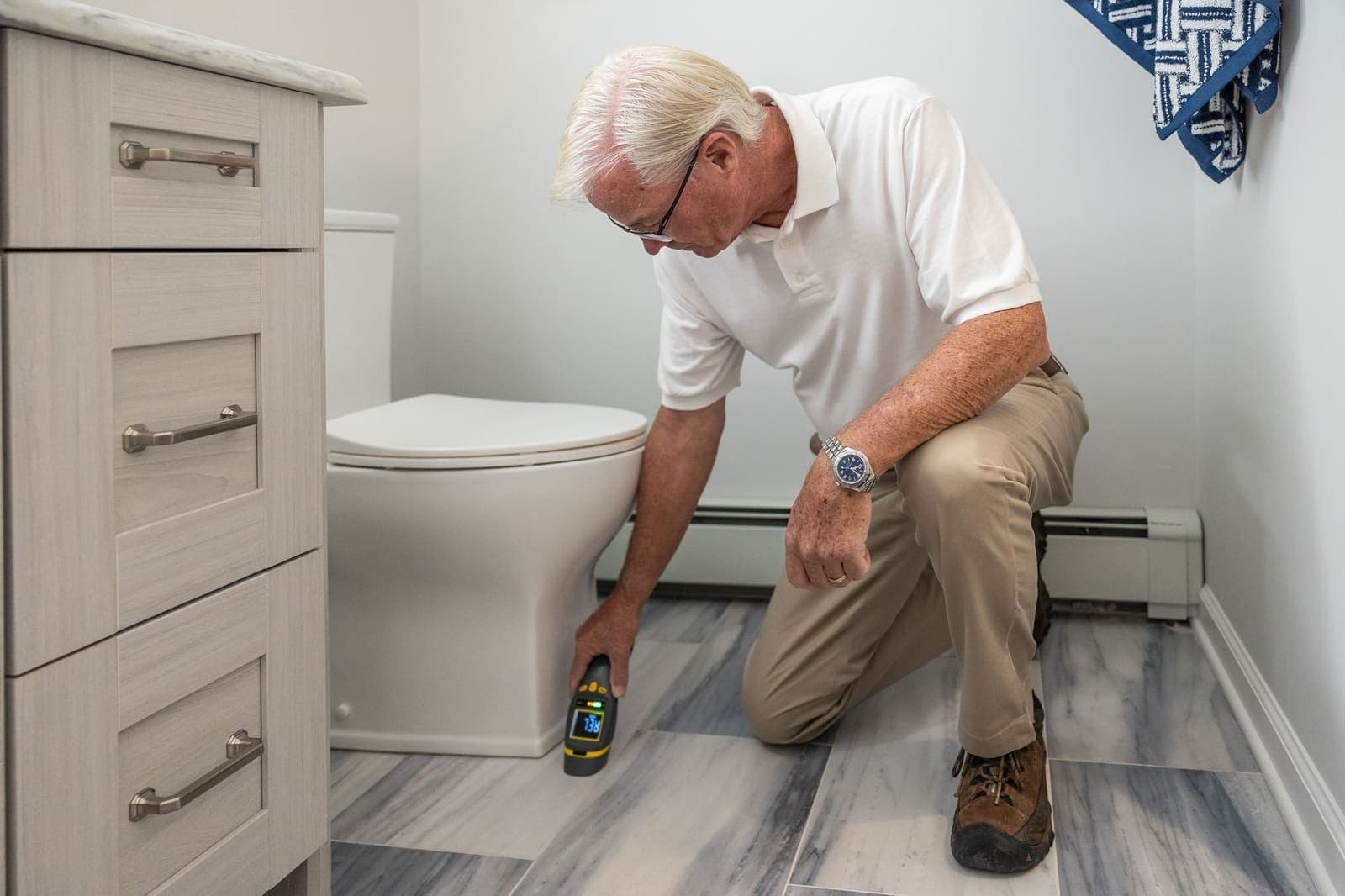
Leak Detection at a glance
- First check
- The water meter test (below), which you can do yourself.
- Tools
- Pressure test gauges, acoustic ground microphones, thermal cameras, moisture meters, tracer gas.
- Common hidden leaks
- Supply lines in walls, slab leaks, underground service lines, shower valves and pans.
- Act fast if
- Ceilings sag or stain, floors are warm and wet, or your water bill jumps without explanation.
Signs of a hidden leak
- A water bill that rises without a change in use
- The sound of running water when everything is off
- Stains, bubbling paint or soft drywall
- Warm spots on a floor (a hot water line leaking under a slab)
- Musty odor or mold in one area
- Low water pressure, or the water heater running more than usual
The water meter test
Turn off every fixture
Include the ice maker, irrigation and washing machine. Make sure no toilet is refilling.
Read the meter
Most meters have a small leak indicator (a triangle or dial) that spins with very small flows. Note its position or take a photo.
Wait 30–60 minutes
Don't use any water.
Read it again
If the reading changed or the indicator moved, water is going somewhere. Next, close the main shutoff valve at the house: if the meter still moves, the leak is in the service line between the meter and the house.
A running toilet is the most common "hidden" leak. Put a few drops of food coloring in the tank; color in the bowl after 15 minutes without flushing means the flapper is leaking.
How professionals pinpoint leaks
| Method | What it does | Best for |
|---|---|---|
| Isolation and pressure testing | Shuts off sections and watches for pressure loss | Proving which line leaks |
| Acoustic detection | Ground microphones and amplifiers pick up the sound of escaping water | Slab and underground leaks |
| Thermal imaging | Shows temperature differences from wet materials or hot water lines | Walls, ceilings, radiant floors, hot water slab leaks |
| Moisture meters | Measure water in drywall, wood and flooring | Mapping how far water has spread |
| Tracer gas | A safe gas is put in the line and detected where it escapes | Hard-to-hear leaks, long service lines |
After the leak is found
The fix depends on where the leak is: a fitting inside a wall is opened and repaired; a slab leak may be repaired through the floor, rerouted overhead, or handled by repiping if the pipe is failing in several places. Document the damage with photos before repairs if you plan to make an insurance claim.
Problems that lead to leak detection
- Signs of a hidden leakThe signs of a leak you can't see, the water meter test that confirms it in minutes, and how to narrow it to a toilet, a wall, the slab or the yard.
- Water bill suddenly highWhat makes a water bill jump: running toilets, irrigation, hidden leaks, a billing estimate or a rate change. How to sort them out in under an hour.
- Water leaking from the ceilingWhat to do when water drips through a ceiling, how to tell a plumbing leak from a roof leak, and the bathroom sources most often behind it.
Common questions
How does leak detection work without tearing out walls?
Plumbers narrow the leak down to one line with pressure testing, then pinpoint it with acoustic equipment, thermal cameras and moisture meters, so only a small area needs to be opened.
Can a leak be under my house slab?
Yes. Water lines run under the slab in many homes. Warm floor spots, the sound of water, and a meter that keeps moving are common signs. See slab leak repair.