
Drain Cleaning
Hydro jetting
Short answer
Hydro jetting cleans the full inside diameter of a drain or sewer pipe with a hose that sprays water at high pressure through a specialized nozzle. It removes grease, scale, sludge and fine roots that a cable snake leaves behind, but it's only appropriate for pipes in sound condition, so plumbers usually inspect the line with a camera first.
Updated · Editorial team; not yet technically reviewed
Hydro Jetting at a glance
- What it removes
- Grease, soap scum, mineral scale, sludge, sand and fine root masses.
- Where it's used
- Kitchen lines, main building drains, sewer laterals and commercial grease lines.
- Usually preceded by
- A camera inspection to confirm the pipe can take the pressure.
- Not recommended for
- Collapsed, badly cracked or deteriorated pipe; some older fiber (Orangeburg) and thin cast iron.
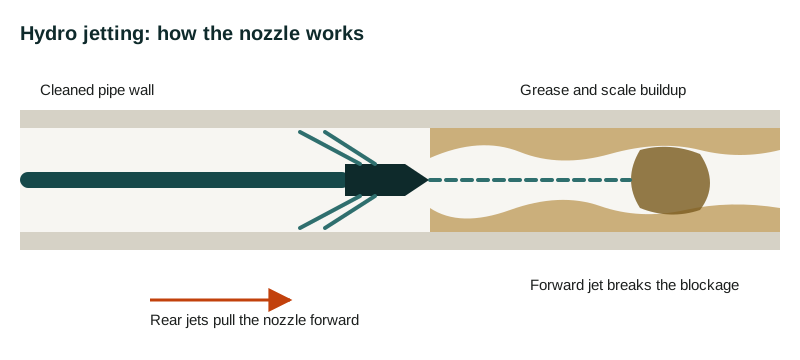
How hydro jetting works
A jetter is a pump that pushes water through a flexible hose to a nozzle. Most nozzles have several jets angled backward and one or more facing forward. The backward jets do two things: they pull the hose up the pipe, and they scour the pipe wall all the way around. The forward jet breaks into the blockage ahead.
The plumber feeds the hose in through a cleanout, runs it past the blockage, then pulls it back slowly so the rear jets clean the pipe while the loosened debris flushes downstream. Specialized nozzles exist for different jobs, including rotating nozzles for heavy grease and root-cutting heads.
Hydro jetting vs. drain snaking
A cable snake punches a hole through a clog. A jetter cleans the whole pipe. That difference is why the two methods fit different problems.
| Hydro jetting | Drain snaking | |
|---|---|---|
| Cleans | The full pipe wall | A path through the blockage |
| Best for | Grease, scale, recurring clogs, fine roots | A single obstruction, a quick opening |
| Pipe condition needed | Sound pipe | Tolerates more imperfect pipe |
| Usually costs | More | Less |
| How long results last | Longer, because buildup is removed | Shorter when walls are coated |
Many jobs use both: a snake opens a line that's fully blocked so water can drain, then a jetter cleans it.
Can hydro jetting damage pipes?
In a pipe that's in good condition, no. PVC, ABS and sound cast iron and clay handle jetting well. The risk is to pipe that's already failing. Jetting can widen a crack, push through a pipe that's badly corroded, or break apart a section that's collapsing.
That's why a camera inspection normally comes first. If the camera shows cracks, heavy root intrusion at a broken joint, or a flattened section, jetting can make it worse, and the conversation turns to sewer line repair instead.
When hydro jetting is the right call
- A kitchen line that clogs repeatedly from grease
- A main line that has been snaked more than once in a year
- Roots that return after cutting, if the pipe itself is intact
- Before pipe relining, which needs a clean pipe wall to bond to
- Commercial kitchens, where grease loads are heavy
What to expect during the visit
Access
The plumber locates a cleanout. If none exists, they'll explain the alternatives.
Camera look (usually)
They check the pipe's condition and find where the buildup is.
Jetting
They choose a nozzle, set the pressure for the pipe material, and work the line in passes.
Verification
A second camera pass or a flow test shows the result. Ask to see the footage.
Common questions
How long does hydro jetting last?
Because it removes buildup instead of cutting a hole through it, results typically last longer than snaking. Lines with roots or heavy grease use will build up again, and many owners schedule maintenance cleaning.
Does hydro jetting remove tree roots?
It removes fine roots and can cut through larger masses with a root-cutting nozzle. Roots return through the same cracked joint, so a line with repeated root intrusion eventually needs a repair or liner.
Is hydro jetting safe for old cast iron pipes?
Often yes, at a pressure matched to the pipe. Cast iron that's heavily scaled or thin from corrosion needs a camera check first, and some plumbers use a descaling tool instead.