
Plumbing service
Repiping
Short answer
Repiping replaces a home's water supply lines, usually because the existing pipe (often galvanized steel or polybutylene, sometimes aging copper) is corroding, leaking in multiple places, or restricting flow. New lines are typically PEX or copper, routed through walls and ceilings with small openings that are patched afterward.
Updated · Editorial team; not yet technically reviewed
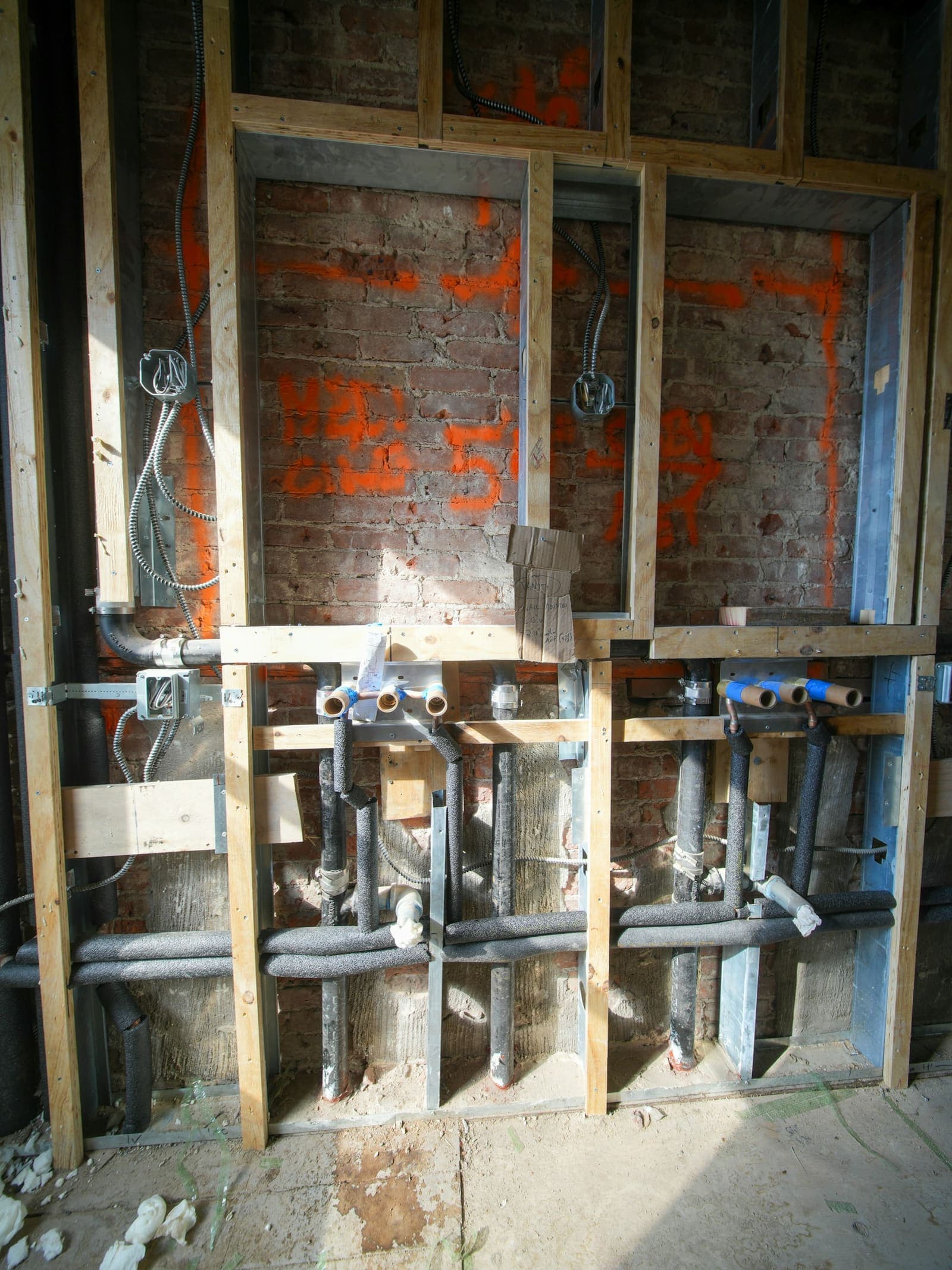
Repiping at a glance
- Common reasons
- Repeated leaks, rusty water, low pressure from corroded galvanized pipe, or polybutylene.
- New pipe options
- PEX (flexible, fewer fittings), copper (rigid, long track record), sometimes CPVC.
- Typical disruption
- Small wall and ceiling openings, water off during working hours, then patching.
- Permit
- Usually required, with inspection before walls are closed.
Signs a home needs repiping
- Leaks in different places over a short time, rather than one isolated failure
- Rusty or discolored water, especially after the water has sat
- Pressure that has declined over years (galvanized pipe narrows inside as it corrodes)
- Gray polybutylene supply pipe, used widely in US homes from roughly the late 1970s to the mid-1990s
- Pinhole leaks recurring in copper
Old pipe materials and how they fail
| Material | Common in | How it fails |
|---|---|---|
| Galvanized steel | Many homes built before the 1960s | Corrodes and narrows inside; rust, low pressure, leaks at threads |
| Polybutylene | Roughly late 1970s to mid-1990s | Can become brittle and fail without warning, especially at fittings |
| Copper | Widely used from mid-century on | Usually long-lasting; pinhole leaks in some water conditions |
| CPVC | Many homes from the 1980s on | Can become brittle with age and heat |
| PEX | Most new construction today | Generally durable; keep it out of prolonged sunlight |
PEX vs. copper for a repipe
| PEX | Copper | |
|---|---|---|
| Installation | Flexible runs, fewer fittings, fewer wall openings | Rigid; more fittings and soldered or press joints |
| Freeze tolerance | More tolerant of expansion than rigid pipe | Can split when frozen |
| Water chemistry | Not affected by corrosion | Can pit in aggressive water |
| Cost | Usually lower installed | Usually higher installed |
What a repipe looks like
Plan the routes
The plumber maps fixtures and routes new lines through attic, crawl space or walls to minimize openings.
Run new lines
New pipe is installed while the old system stays in service where possible.
Switch over
Fixtures are connected to the new lines, often with new shutoff valves at each fixture.
Test and inspect
The system is pressure-tested and inspected, then walls and ceilings are patched.
Problems that lead to repiping
- Noisy or banging pipesWhat causes pipes to bang, knock, rattle or whistle, how water hammer arrestors and pressure valves fix it, and when noise signals a bigger problem.
- Brown or rusty waterWhy tap water turns brown or rusty, how to tell a city main issue from corroding galvanized pipe or a water heater, and when to stop drinking it.
Common questions
How long does it take to repipe a house?
Many single-family repipes take a few days, depending on the home's size, access and number of fixtures. Water is typically restored at the end of each workday.
Do I need to repipe or just fix the leak?
One leak in otherwise sound pipe usually just needs a repair. Repeated leaks, corroded galvanized pipe or polybutylene are reasons to consider repiping.