
Plumbing service
Sewer line replacement
Short answer
Sewer line replacement installs a new pipe from your house to the public sewer (or septic tank) when the old line is collapsed, broken in many places, badly sagged, or made of a material that's failing throughout, such as Orangeburg. It's done by open trench or by trenchless pipe bursting, and almost always requires a permit and inspection.
Updated · Editorial team; not yet technically reviewed
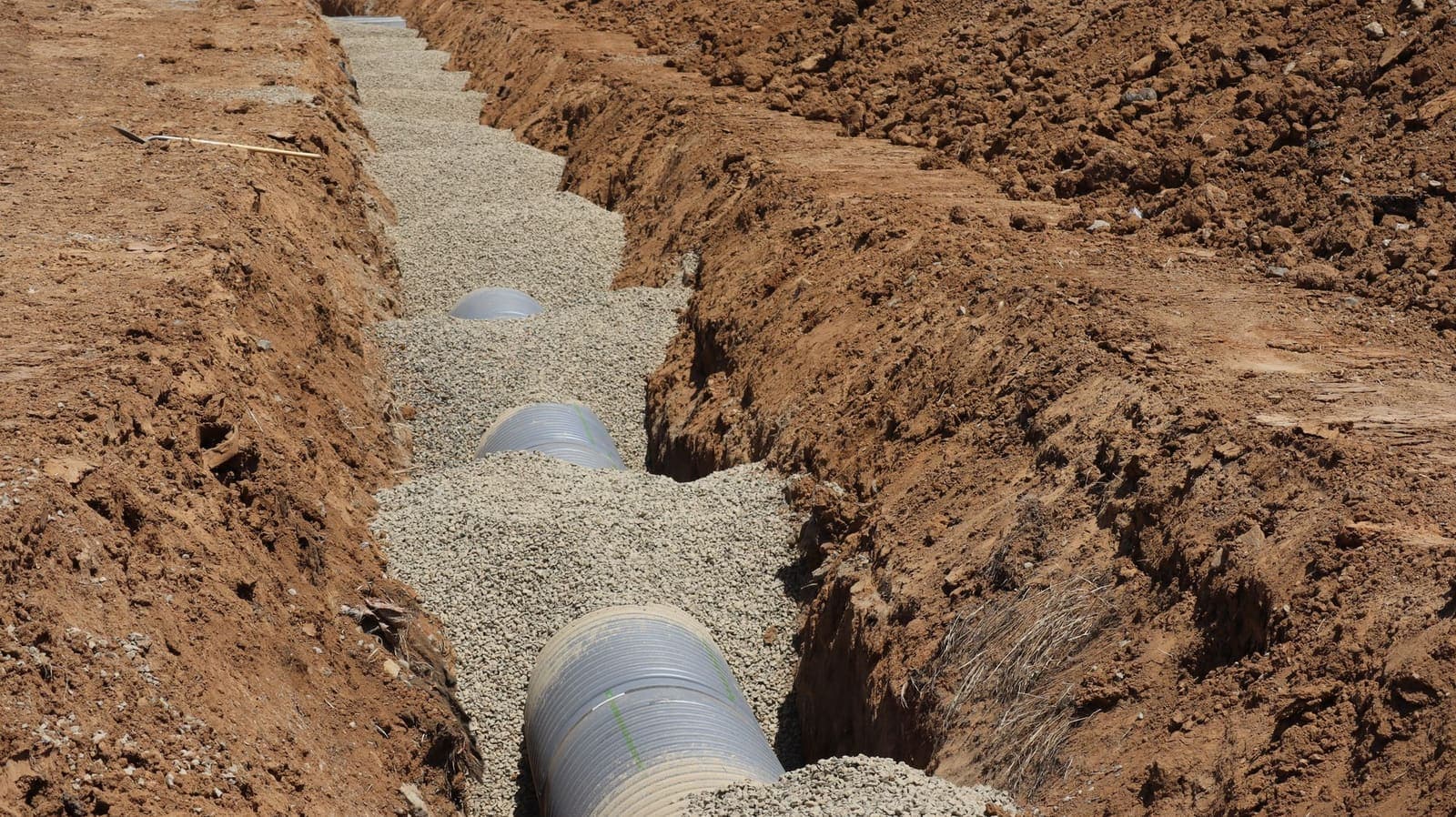
Sewer Line Replacement at a glance
- Replacement, not repair, when
- Damage runs the length of the line, the pipe is collapsing, or there are multiple sags.
- Methods
- Open-trench excavation or trenchless pipe bursting.
- Typical new pipe
- PVC, joined with solvent-welded or gasketed fittings, laid to a continuous slope.
- Confirm first
- A camera inspection showing the full line.
When replacement makes more sense than repair
- The camera shows cracks, offsets or root intrusion at many joints along the line, not one or two.
- The pipe has collapsed or deformed (common with Orangeburg fiber pipe).
- There are sags in more than one place; liners follow the old pipe and can't correct slope.
- The line has already been repaired several times and keeps failing.
- The pipe is undersized or at the wrong slope for current use.
Open trench vs. pipe bursting
| Open trench | Pipe bursting | |
|---|---|---|
| Digging | Along the full line | An entry pit and an exit pit |
| Fixes sags and grade | Yes, the new pipe is laid to a proper slope | Largely follows the old path |
| Surface restoration | Yard, landscaping or paving along the route | Only at the pits |
| Not suited to | Lines under driveways, mature trees or structures when avoidable | Some soil conditions, lines near other utilities, severe sags |
What the job involves
Permit and utility locates
The plumber pulls a permit, and underground utilities are marked through 811 before any digging.
Excavation or pits
Depth depends on the line; the connection at the city main or tap is often the deepest point.
New pipe and cleanout
New pipe is laid on proper bedding at a steady slope, often with a two-way cleanout added near the house for future access.
Inspection and backfill
The local inspector usually checks the pipe before it's covered. Then the trench is backfilled and compacted.
What drives the cost
- Length and depth of the line
- Method, and what's above the pipe (lawn, driveway, landscaping, a patio)
- Whether the work extends into the street or right-of-way, which can add permits, traffic control and street repair
- Soil and groundwater conditions
- Restoration: paving, sod or landscaping afterward
Get written quotes that state the method, length, pipe material, permit, cleanout and restoration so they can be compared fairly.
We don't publish prices; they vary by market. Get a written quote first.
Common questions
How long does sewer line replacement take?
Many residential jobs take one to a few days, plus time for inspection. Street work, deep lines, or difficult access take longer.
Can I stay in the house during sewer replacement?
Usually yes, but you'll have little or no drain use while the line is disconnected. The plumber can tell you when water use must stop.
Who replaces the part of the sewer under the street?
It depends on the city. Many make the homeowner responsible to the main; some take over at the property line or cleanout. Ask your sewer utility before approving street work.