
Plumbing service
Water heater replacement
Short answer
A water heater is usually worth replacing, rather than repairing, when the tank itself leaks, when it's past about 10–12 years (tank models) and needs a significant repair, or when it can't keep up with the household. A proper replacement includes sizing, code-required safety parts, a permit where required, and removal of the old unit.
Updated · Editorial team; not yet technically reviewed
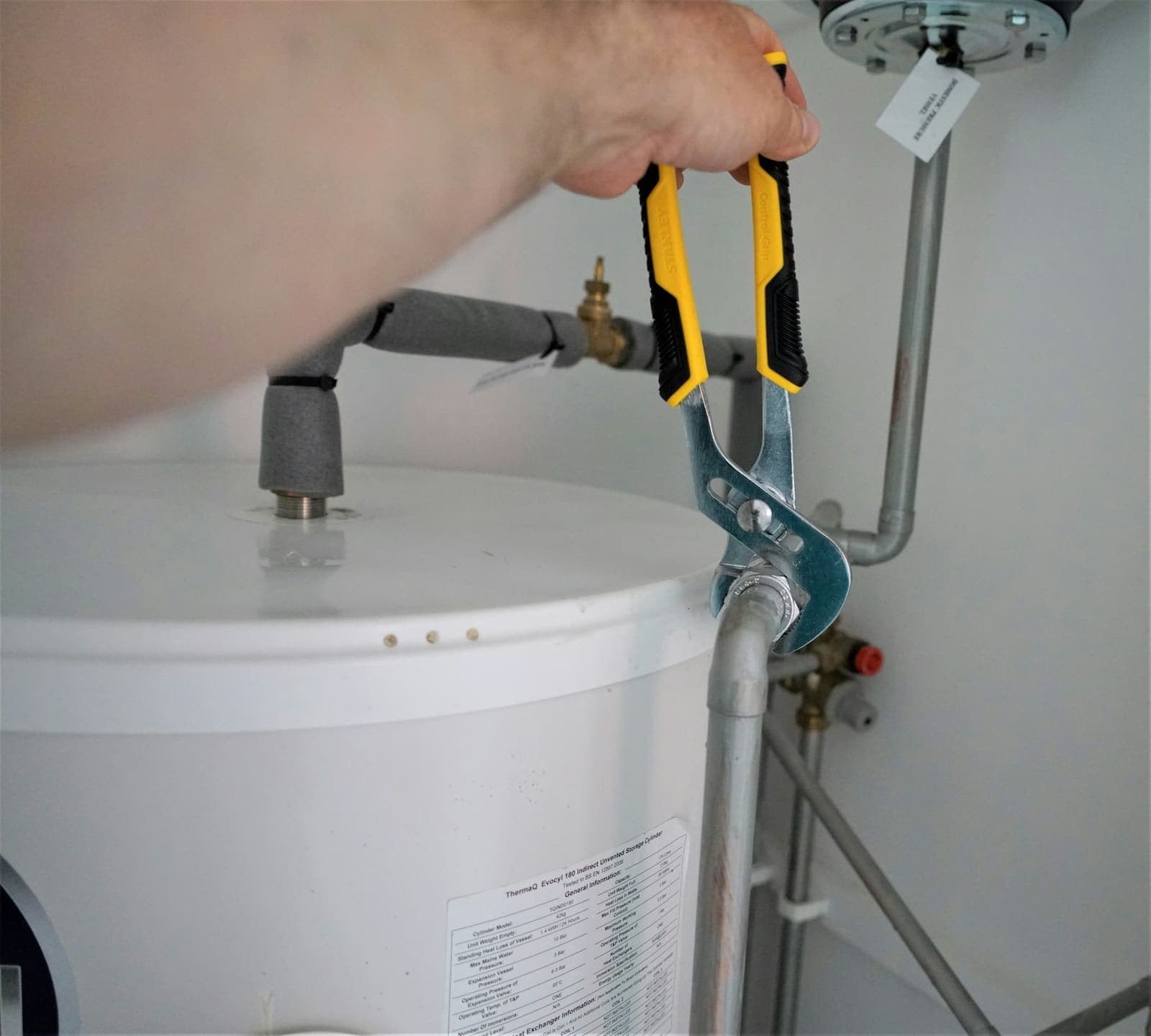
Water Heater Replacement at a glance
- Typical tank lifespan
- Around 8–12 years; tankless units often last longer with regular descaling.
- Replace, don't repair, when
- The tank leaks, or the unit is old and needs a major part.
- Options
- Gas or electric tank, tankless, or heat pump (hybrid) water heaters.
- Safety parts
- Temperature and pressure relief valve and discharge pipe, venting, and expansion tank where required.
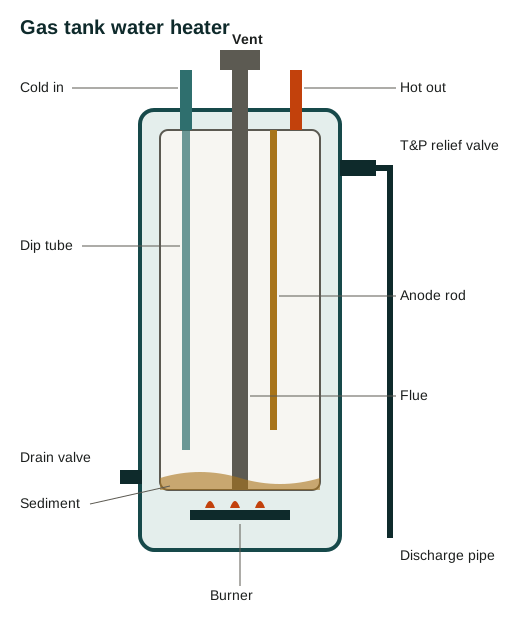
Repair or replace?
| Problem | Usually | Why |
|---|---|---|
| Water leaking from the tank body or bottom | Replace | A corroded tank can't be repaired |
| Leak at a pipe fitting or valve | Repair | The tank is fine; the fitting isn't |
| No hot water, unit under ~8 years | Repair | Thermocouple, igniter, gas valve or element failures are fixable |
| Rumbling or popping | Flush, then decide | Sediment; an older tank with heavy sediment is near the end |
| Rusty hot water only | Inspect the anode | Can signal internal tank corrosion |
| Runs out of hot water too fast | Replace or resize | Undersized, or a failing dip tube or element |
Choosing a replacement
Size a tank by your household's peak-hour use (the first-hour rating on the label), not just gallons. Size a tankless unit by the flow rate you need at once and the temperature rise from your incoming water, which is larger in cold climates.
| Type | Strengths | Consider |
|---|---|---|
| Gas tank | Fast recovery, familiar, lower upfront cost | Needs proper venting and combustion air |
| Electric tank | Simple install, no venting | Slower recovery; operating cost depends on electricity rates |
| Tankless | Endless hot water at its flow rate, compact | Higher upfront cost; gas models may need a larger gas line and new venting; descaling in hard water |
| Heat pump (hybrid) | Much lower electricity use than a standard electric tank | Needs space and air volume around it; cools the room it's in; condensate drain |
What a proper installation includes
- A permit and inspection where your jurisdiction requires them (most do for water heater replacement)
- A temperature and pressure relief valve with a discharge pipe routed to a safe location
- Correct venting for gas units, and combustion air
- An expansion tank where the water system is closed (for example, with a check valve or pressure-reducing valve)
- Seismic strapping in areas that require it
- A drain pan where a leak could damage the building
- Removal and disposal of the old unit
Problems that lead to water heater replacement
- Water heater leakingWhere a water heater leak is coming from tells you whether it's a cheap fix or a new tank. How to find it safely, and what to shut off first.
- No hot waterWhy a house suddenly has no hot water, or runs out fast, with separate checks for gas, electric and tankless heaters and when to call.
Common questions
How long does a water heater last?
Tank water heaters commonly last about 8–12 years; hard water, high temperatures and skipped maintenance shorten that. Tankless units often last longer if they're descaled on schedule.
How do I find the age of my water heater?
The serial number on the label usually encodes the manufacture date. The format varies by brand; the manufacturer's website or support line can decode it.
Is tankless worth it?
It depends on your hot water pattern, fuel, and the cost of upgrading gas lines and venting. See tankless vs. tank water heaters.