
Do this now
Get everyone out
People and pets, immediately. Don't stop to search for the source.
Don't create a spark
No light switches, no unplugging, no doorbells, no lighters. Don't use a phone until you're outside and away from the building.
Call from outside
Your gas utility's emergency line (it's on your gas bill) or 911. Propane users call their propane supplier.
Don't go back in
Wait until the utility or fire department says it's safe.
Signs of a gas leak
- A rotten-egg or sulfur smell. It's an added odorant, because natural gas itself is odorless.
- A hissing or whistling sound near a gas line, meter or appliance.
- Dead plants or bubbling in standing water over a buried gas line.
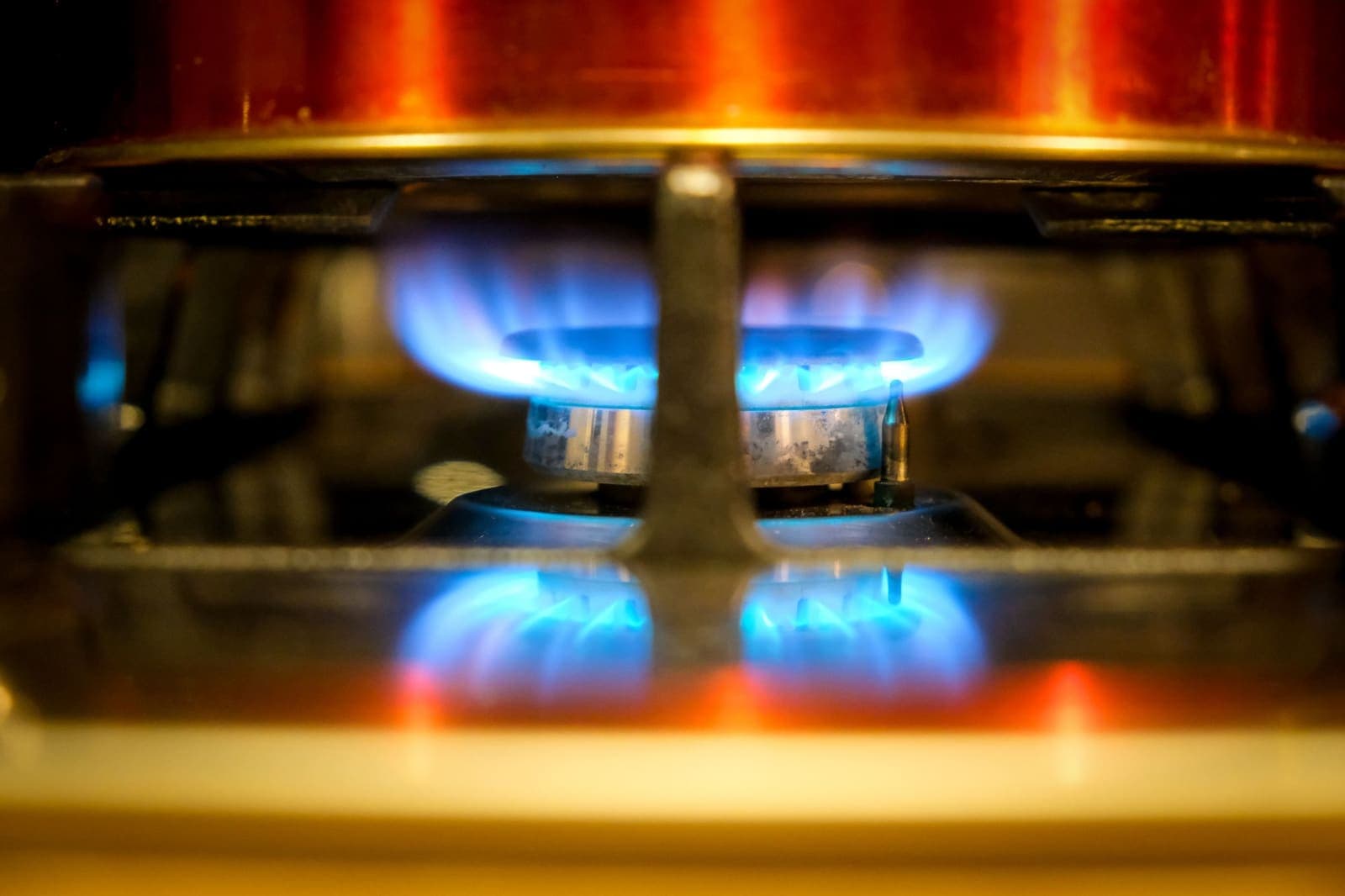
- A pilot or burner flame that's yellow or orange instead of blue, or soot around an appliance.
Gas, or something that smells like it?
When in doubt, treat it as gas and leave. These are only for after the utility has ruled a leak out.
- If Sulfur smell in the air near the stove, furnace, dryer or water heater
- Possible gas leak. Leave and call the gas utility.
- If Smell only when hot water runs
- Usually the water heater's anode reacting with the water. See hot water smells like rotten eggs.
- If Smell near a floor drain or unused shower
- A dry trap letting sewer gas in. See sewer smell in the house.
- If Smell outdoors near the meter
- Report it to the gas utility; leaks before the meter are theirs to repair.
Who fixes what
The gas utility responds to the emergency, finds the leak and shuts off or makes the system safe. It typically handles leaks on its side of the meter. Leaks on house piping or appliances are repaired by a licensed plumber or gas fitter, depending on your state's licensing, and the utility may require a pressure test before turning gas back on.
See gas line installation and repair for what that work involves.
Carbon monoxide is different
Carbon monoxide has no smell. A gas appliance that's burning poorly or venting back into the house can produce it without any gas odor. Headaches, dizziness or nausea that ease when you leave the house are warning signs. Install CO alarms near sleeping areas and on each level, and have gas water heaters and furnaces checked if they show soot or yellow flames.
After the emergency
- Have a licensed professional repair and pressure-test the line before appliances are relit.
- Replace old uncoated brass flexible connectors on ranges and dryers, which can crack.
- Ask whether a gas detector or an excess-flow valve makes sense for your home.
More questions
Can a faint gas smell near the stove be normal?
A brief whiff when a burner lights can happen. A smell that lingers, or any smell with the burners off, is not normal. Leave and call.
Does the gas company charge to check a leak?
Many gas utilities respond to suspected leaks at no charge. Repairs to your house piping and appliances are usually the owner's cost.