
If water is pooling now
Turn off the heat source
Gas: set the control knob to off or pilot. Electric: switch off the heater's breaker. An electric heater must never run with a drained tank; the elements burn out in minutes.
Close the cold-water valve
It's on the pipe entering the top of the tank. Closing it stops the tank from refilling. If it won't turn, close the main water shutoff.
Protect the floor
Move boxes and anything electrical away. If the heater sits in a pan, check that the pan's drain line isn't blocked.
Leak by location
Dry the area with a towel, wait a few minutes, then look for the first wet spot, working from the top down.
| Where it's wet | Likely source | Usual fix |
|---|---|---|
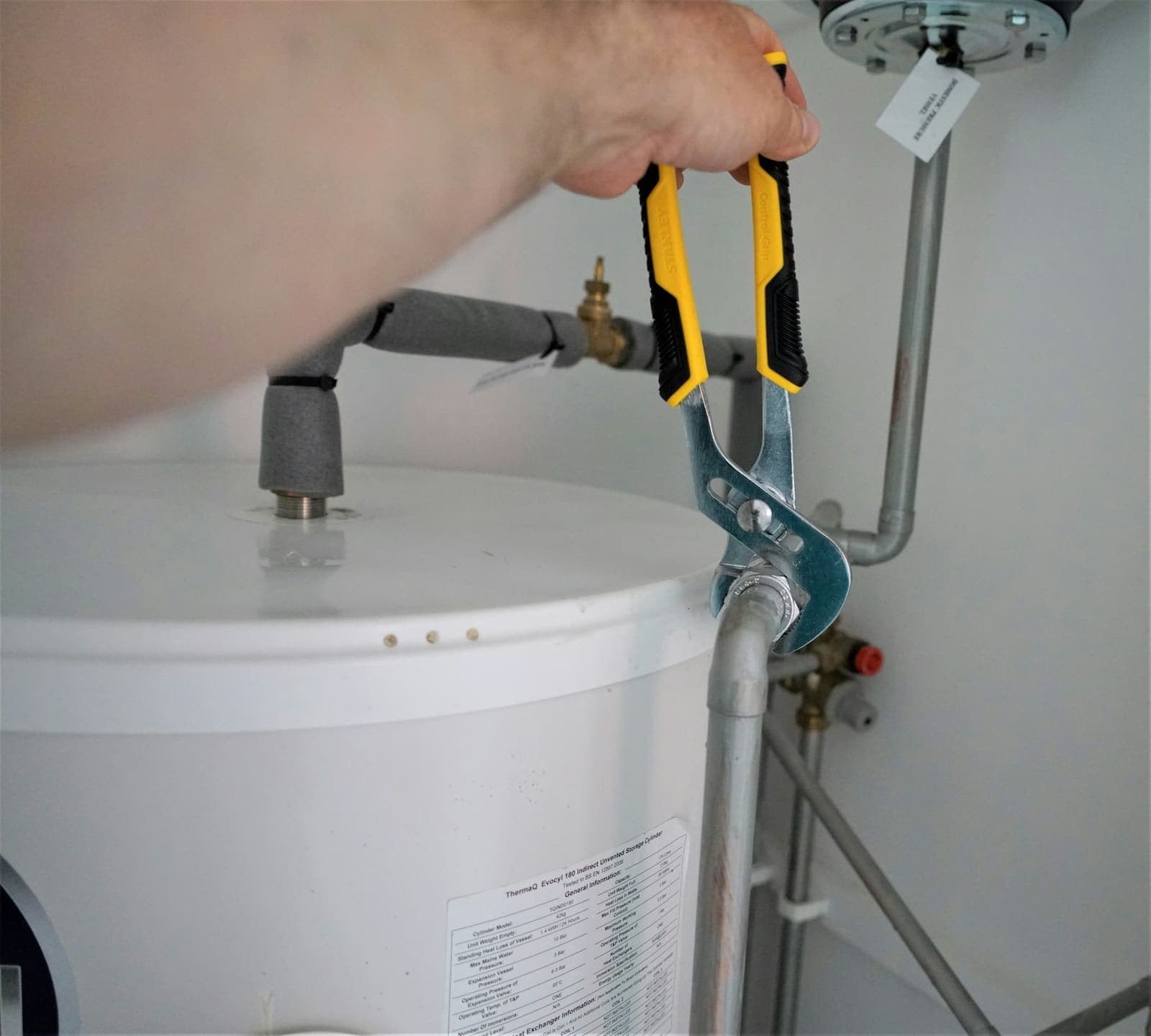
| Top of the heater, at the pipesMost common | Drips at the cold inlet, hot outlet or their flexible connectors; green or white crust on fittings. | Tighten or replace the connector or nipple. A small, inexpensive repair. |
| Relief valve discharge pipeMost common | Water drips or spurts from the pipe on the side of the tank, often after hot water use. | Test water pressure and temperature first; the valve may be doing its job. Otherwise replace the valve or add an expansion tank. |
| Drain valve at the bottomPossible | Drips from the spigot near the floor, especially after a flush. | Cap it or replace the valve. |
| CondensationPossible | Water appears when a gas heater starts on a cold tank, then dries up. | No fix needed if it stops once the tank warms. Persistent dripping onto the burner needs a look. |
| The tank itselfLess common | Water seeps from under the jacket or the base with no wet fitting above; rust stains on the floor. | Replace the heater. A corroded-through tank can't be patched. |
Why a small drip deserves attention
A tank that has started seeping from the body only gets worse, and when it fails completely it can release its full volume, typically 40 to 50 gallons in a house, plus whatever flows in from the supply until someone closes the valve. Heaters in attics, closets and finished basements do the most damage.
A relief valve that discharges is a different story: it may be protecting the tank from too much pressure or heat. Capping or plugging that pipe to stop a drip is dangerous, because it removes the protection against a tank explosion.
What you can safely check
Read the label
The rating plate shows the manufacture date, often encoded in the serial number. A tank past about 10 years that's leaking from the body is due for replacement either way.
Feel the fittings
With the heater off, wipe each connection at the top and look for fresh water.
Watch the relief pipe
Note whether it drips all the time or only after the heater runs. That tells the plumber whether to look at pressure, temperature or the valve.
Caution: Don't lift the relief valve's lever to test it on an old heater unless you're ready to replace it; old valves often fail to reseal.
When to call a plumber
- Water is coming from the tank body or the base.
- The relief valve discharges repeatedly. That points to excess pressure or temperature, which needs diagnosis.
- You smell gas, or water is reaching the burner area of a gas heater.
- The heater is in an attic or above a finished room.
More questions
Can I still use hot water if my water heater is leaking?
Only if the leak is from a fitting and you've confirmed the tank itself is dry. If the tank body is leaking, turn it off and close the cold supply until it's replaced.
How long does a leaking water heater last?
There's no safe estimate. A corroded tank can seep for weeks or split in a day. Plan the replacement now rather than waiting.
Is a leaking water heater covered by insurance?
Policies commonly cover sudden water damage but not the heater itself or long-term seepage. Photograph the damage and check your policy.