
Plumbing service
Bathroom remodel plumbing
Short answer
Bathroom remodel plumbing covers everything behind the finishes: supply lines, drains, vents, the shower valve and the fixture rough-in positions. Keeping fixtures in their current locations keeps costs down; moving a toilet or shower drain means rerouting drain and vent pipe, which is harder on slab foundations. Plumbing changes generally need a permit and a rough-in inspection before walls are closed.
Updated · Editorial team; not yet technically reviewed
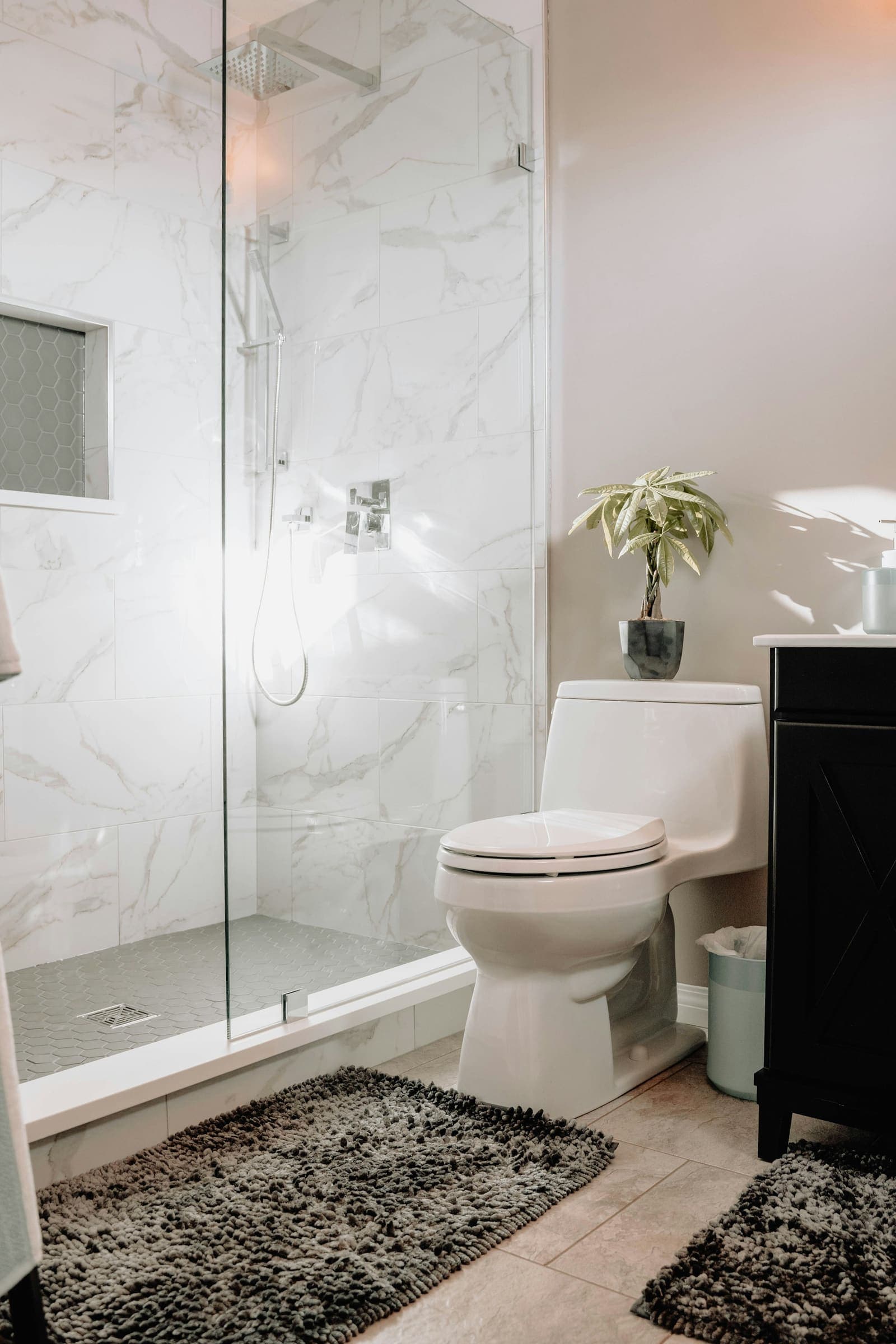
Bathroom Remodel Plumbing at a glance
- Biggest cost driver
- Moving drains, especially the toilet, and especially on a slab.
- Shower valve
- Pressure-balancing or thermostatic valves provide anti-scald protection and are generally required for showers.
- Inspections
- Rough-in (before walls close) and final.
- Good time to
- Replace old supply pipe, add shutoff valves, and fix known drain problems.
Moving fixtures
| Change | Difficulty | Why |
|---|---|---|
| Same layout, new fixtures | Low | Existing drains and supplies are reused |
| Moving a sink a short distance | Moderate | Drain and vent adjustments in the wall |
| Moving a shower or tub drain | Higher | Drain slope and trap placement; slab may need cutting |
| Moving a toilet | Highest | Large drain, slope requirements, venting, and floor framing or slab |
Shower and tub decisions
- Valve type: pressure-balancing valves hold a steady mix when pressure changes; thermostatic valves hold a set temperature and allow more flow and control.
- Curbless showers: need a recessed subfloor or slab work and careful waterproofing and drainage.
- Linear drains: allow a single-slope floor, which is good for large-format tile.
- Tub fillers and freestanding tubs: floor-mounted fillers need supply lines under the floor.
Permits and sequence
Design and permit
Fixture locations and plumbing changes are drawn and permitted.
Demolition
Plumbing is capped and exposed.
Rough-in and inspection
Drains, vents and supplies are installed and tested, then inspected before walls close.
Finishes and trim
After tile and cabinets, fixtures and trim are set, followed by the final inspection.
What affects the cost
- How many fixtures move and how far
- Framed floor vs. slab (slab relocations need concrete cutting)
- Shower valve type, body sprays and multiple outlets
- Replacing old supply or drain pipe while the walls are open
- Permit and inspection requirements
We don't publish prices; they vary by market. Get a written quote first.
Common questions
Should I replace old pipes during a bathroom remodel?
If the supply lines are galvanized or polybutylene, or the drains are corroded cast iron, the remodel is the least disruptive time to replace them, because the walls are already open.
Do I need a permit for bathroom plumbing?
Moving or adding fixtures and replacing drain or supply piping generally requires a permit. Replacing a fixture in place often doesn't, but rules vary by city.
How much does it cost to move a toilet?
It depends on distance, whether the floor is framed or slab, and the venting. Moving a toilet is usually the most expensive plumbing change in a bathroom.