
Plumbing service
Toilet installation
Short answer
Replacing a toilet means removing the old one, checking the drain flange and floor, setting the new toilet on a fresh seal, and connecting a new supply line. Before buying, measure the rough-in (the distance from the wall to the flange bolts), because a toilet that doesn't match won't fit properly.
Updated · Editorial team; not yet technically reviewed
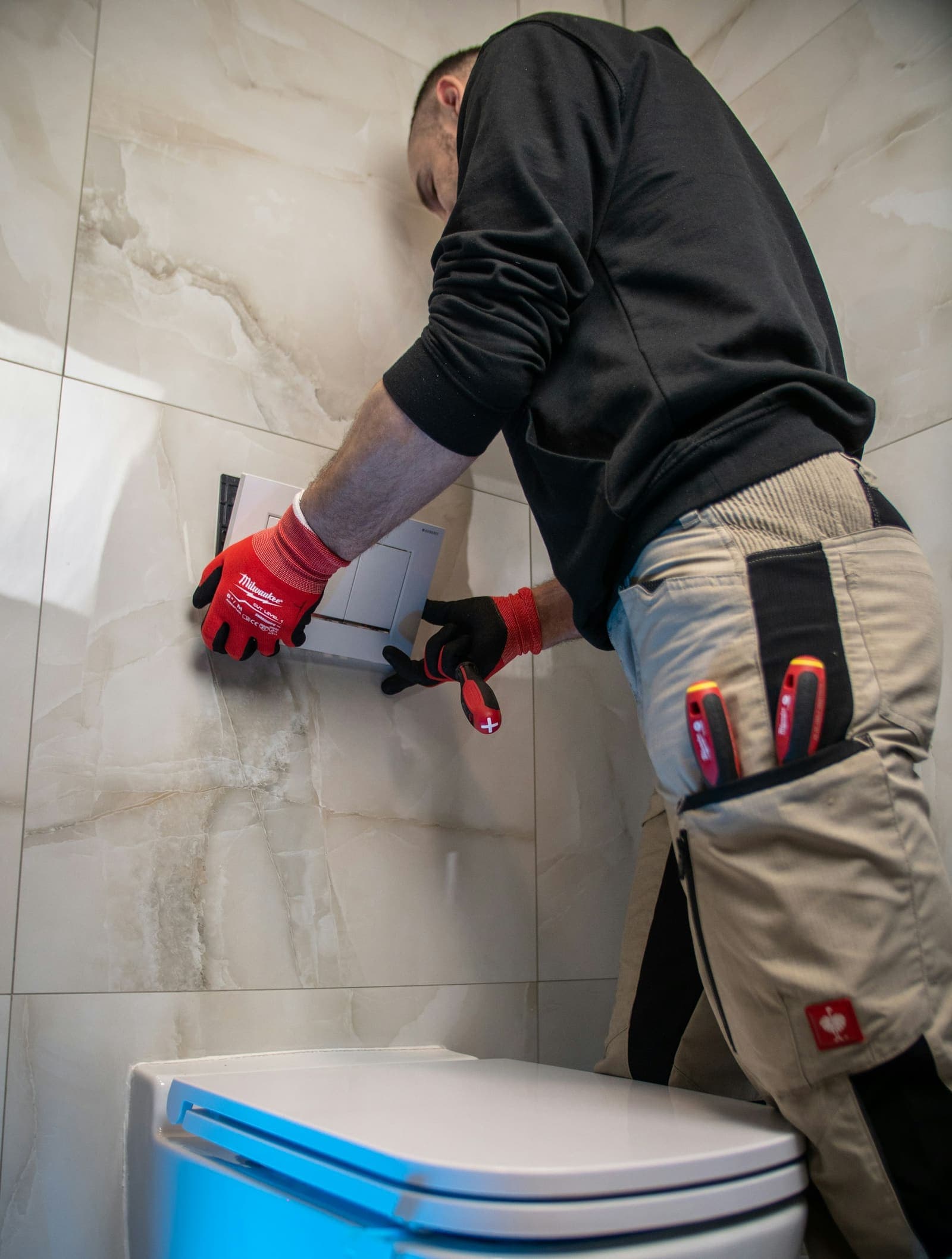
Toilet Installation at a glance
- Measure first
- Rough-in, most commonly 12 inches, with 10- and 14-inch rough-ins in some homes.
- Water use
- Federal law has capped new toilets at 1.6 gallons per flush since the 1990s; WaterSense models use 1.28 or less.
- Comfort
- Round or elongated bowl; standard or comfort (chair) height.
- Inspect
- Flange condition and subfloor when the old toilet comes up.
Choosing a toilet
| Feature | Options | Consider |
|---|---|---|
| Rough-in | 10", 12", 14" | Must match your flange position |
| Bowl shape | Round, elongated | Elongated needs more room in front |
| Height | Standard, comfort height | Comfort height is easier for many adults to use |
| Flush | Single, dual flush; gravity or pressure-assist | Check independent flush performance testing |
| Configuration | Two-piece, one-piece, wall-hung | Wall-hung needs an in-wall carrier and is a remodel job |
Wax ring or wax-free seal?
A traditional wax ring is inexpensive and reliable when the toilet is set once and not moved. It can't be reused, and it doesn't forgive a flange that sits well below the finished floor. Wax-free seals made of foam or rubber can be repositioned if the toilet has to be lifted during setting, and some are designed for recessed flanges. Either works when the flange is sound and level with, or slightly above, the finished floor. What matters most is that the toilet sits firmly without rocking, so the seal isn't broken each time someone sits down.
What a proper installation includes
Remove the old toilet
Water off, tank and bowl drained, supply disconnected, bolts removed.
Inspect the flange and floor
A cracked or low flange can be repaired with a repair ring or spacer; soft subfloor needs repair before the new toilet goes down.
Set on a new seal
A wax ring or wax-free seal, new closet bolts, the toilet level and not rocking.
Connect and test
A new braided supply line and, ideally, a new shutoff valve if the old one is stiff. Flush several times and check for leaks.
What affects the cost
- The toilet itself: one-piece, two-piece, wall-hung, or smart models
- Flange repair or replacement if the old one is broken or too low
- Subfloor repair if a past leak has softened the floor
- A new shutoff valve and supply line
- Haul-away of the old toilet
We don't publish prices; they vary by market. Get a written quote first.
Problems that lead to toilet installation
Common questions
How long does it take to replace a toilet?
A straightforward swap on a sound flange and floor is often done in a couple of hours. Flange or subfloor repairs add time.
How do I measure a toilet rough-in?
Measure from the finished wall behind the toilet (not the baseboard) to the center of the bolts that hold it to the floor.
Should I replace the shutoff valve when replacing a toilet?
If it's old, stiff or leaks when turned, yes. It's a small added cost while the toilet is off.