
Plumbing service
Slab leak repair
Short answer
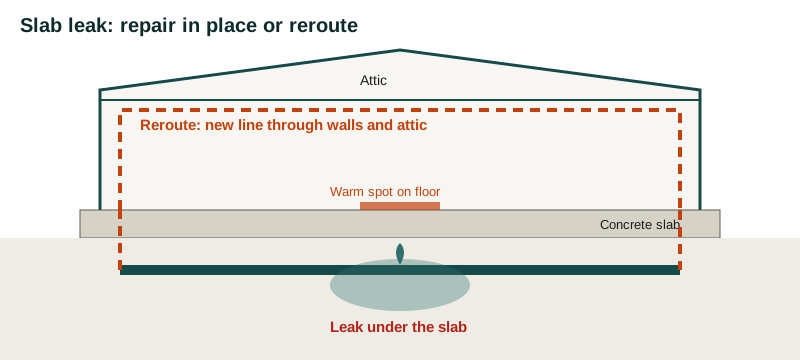
A slab leak is a leak in a water line that runs in or under a concrete slab foundation. After the leak is located, it's repaired by opening the slab at that spot, by rerouting the line through walls or the attic, or by repiping the house when the pipe is failing in more than one place.
Slab Leak Repair at a glance
- Common signs
- Warm floor areas, the sound of running water, a meter that keeps moving, damp flooring or baseboards.
- Causes
- Abrasion against concrete or gravel, corrosion, poor installation, and soil movement.
- Repair options
- Direct (spot) repair, reroute, or whole-house repipe.
- First step
- Leak detection to confirm and pinpoint it.
Signs of a slab leak
- Warm or hot spots on the floor: a leaking hot water line heats the slab above it. You may notice it barefoot or see a pet lying in the same spot.
- Running water sounds when every fixture is off.
- A water meter that keeps moving with everything shut off (see the meter test).
- Damp carpet, lifting floor boards, or cracked tile away from any bathroom or kitchen.
- A water heater that runs constantly, because it's reheating water that's leaking away.
- Low pressure or a sudden rise in the water bill.
How a slab leak is confirmed
The plumber first proves there's a leak and which line it's on: they close valves to isolate hot from cold and the house from the service line, then watch pressure gauges and the meter. Once they know the line, they pinpoint the spot with acoustic ground microphones and, for hot water lines, a thermal camera. Accurate location matters, because every foot of concrete opened adds cost and floor repair.
Why slab leaks happen
- Abrasion: pipes expand and contract with temperature and rub against concrete, gravel or rebar.
- Corrosion: aggressive water chemistry or soil conditions can corrode copper from inside or out.
- Soil movement: expansive clay soils that swell and shrink with moisture put stress on the slab and the pipes in it.
- Installation: kinked or damaged pipe, or fittings buried under the slab, fail earlier.
Repair options compared
| Method | Fits when | Trade-offs |
|---|---|---|
| Direct repair (through the slab) | One leak, easy to reach, pipe otherwise sound | Breaks flooring and concrete at that spot |
| Reroute | The line under the slab is failing or hard to reach | New pipe through walls or attic; drywall patching; leaves the old line abandoned |
| Repipe | Leaks are recurring in several places | Largest project, but ends repeat leaks from the old pipe |
A first slab leak on pipe that's otherwise in good condition is often repaired directly. A second or third leak on the same system is a signal the pipe is failing, and rerouting or repiping usually costs less than chasing leaks one at a time.
After the repair
- Ask the plumber to pressure-test the system after the repair to confirm there's no second leak.
- Dry out affected flooring and baseboards quickly to limit mold; a water mitigation company may be needed for wet carpet pad or drywall.
- If water chemistry is suspected of corroding copper, ask your water utility for its water quality report.
Problems that lead to slab leak repair
Common questions
Is a slab leak an emergency?
An active hot water slab leak should be dealt with quickly: it wastes water and energy and can damage flooring and the foundation. Shut off the water heater's cold supply or the main valve if the leak is large, and call a plumber.
Does insurance cover slab leaks?
Many policies cover resulting water damage and access (tearing out and restoring the floor) but not the pipe repair itself. Coverage varies; check your policy.