
Plumbing service
Drain cleaning
Short answer
Drain cleaning removes the grease, hair, soap scum, scale or roots that narrow a drain pipe. A plumber first works out whether the clog is in one fixture's branch line or in the main line, then clears it with a cable machine (snake) or a high-pressure water jet, and uses a camera when clogs keep coming back.
Updated · Editorial team; not yet technically reviewed
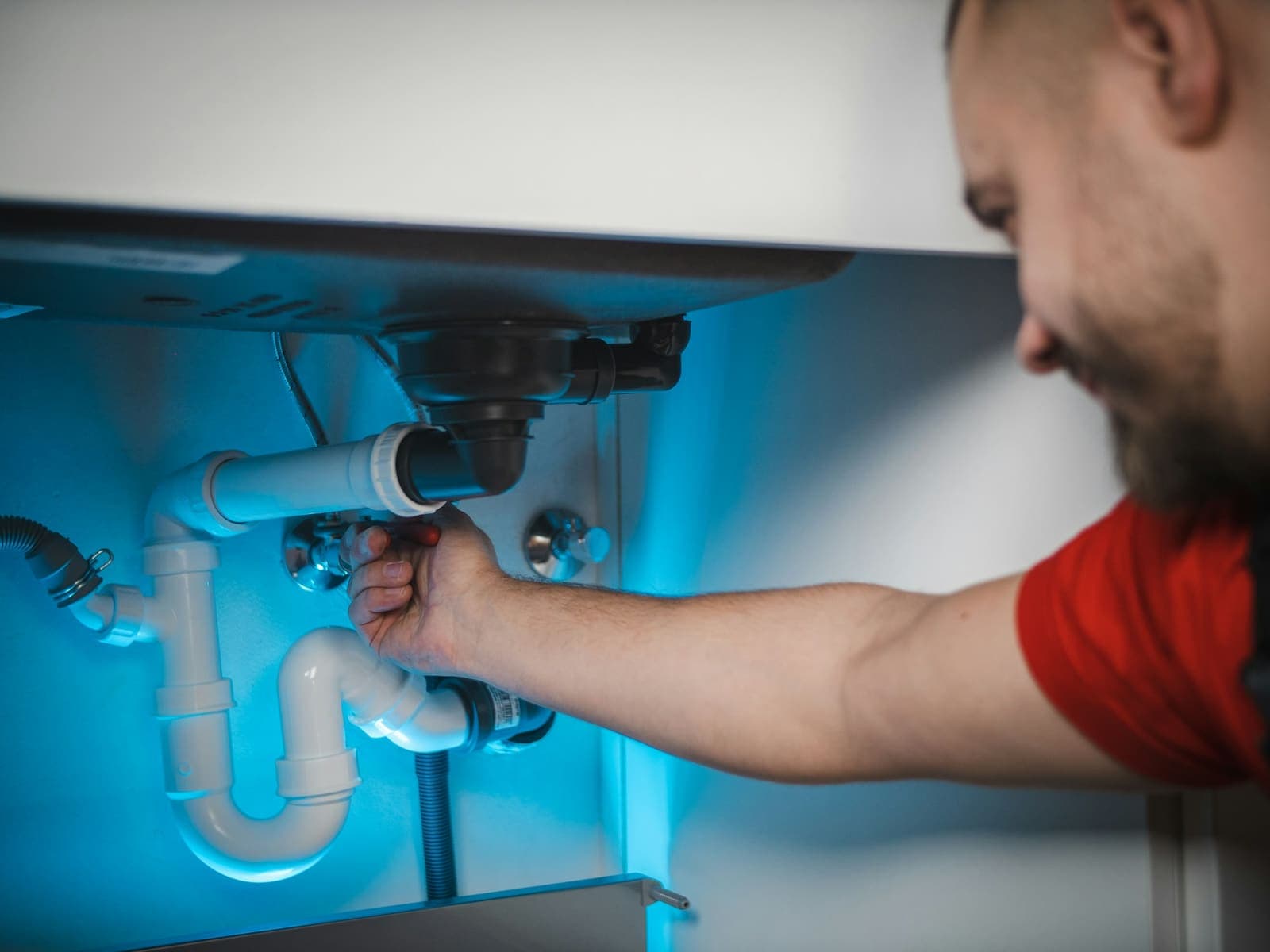
Drain Cleaning at a glance
- Typical visit
- Diagnosis, clearing, then a flow test at the fixtures that were backing up.
- Main methods
- Drain snaking for single blockages; hydro jetting for grease, scale and roots.
- Add-on when clogs recur
- Camera inspection to find a damaged or sagging pipe.
- Call right away if
- More than one fixture backs up at once, or sewage comes up in a tub or floor drain.
Is it one drain or the main line?
This is the first question a plumber answers, because it changes the tool, the access point and the price. Each fixture drains through a small branch line that joins larger pipes and, eventually, the main building drain that leaves the house.
A clog in a branch line affects one fixture. A clog in the main line affects the lowest fixtures first, usually a basement floor drain, a first-floor tub or shower, or a toilet.
| What you notice | Likely location | What it usually means |
|---|---|---|
| One sink drains slowly, others are fine | That fixture's branch line or trap | Hair, soap or grease near the fixture |
| Toilet flush makes the tub gurgle or rise | Main line | Blockage downstream of both fixtures |
| Water appears in a floor drain when the washer drains | Main line | The line can't carry a large volume |
| Several drains slow at once after heavy rain | Main or sewer lateral | Roots, a sag or a groundwater problem |
| Clog returns every few weeks | Either | A buildup the last cleaning didn't remove, or pipe damage |
What causes drains to clog
- Kitchen lines: fats, oils and grease cool and harden on the pipe wall, then catch food particles. Garbage disposals don't prevent this; they grind food into pieces that join the buildup.
- Bathroom lines: hair binds with soap scum. Bar soap made with fats leaves more residue than most liquid soaps.
- Toilets: "flushable" wipes, paper towels and feminine products don't break down the way toilet paper does.
- Main and sewer lines: tree roots enter through joints in clay or older pipe, and pipes that have sagged hold standing water and debris.
- Hard water areas: mineral scale narrows older metal pipes over years and gives debris a rough surface to catch on.
What to try before calling
These are safe for most homeowners. Stop if water is rising toward the rim or sewage is coming up from a lower drain.
Stop using water on that line
If it's the main line, that means every fixture in the house, including the washing machine and dishwasher.
Use the right plunger
A flat cup plunger for sinks and tubs (block the overflow opening with a wet rag); a flanged plunger for toilets.
Clean the stopper and trap
Pull the pop-up stopper or shower strainer and remove hair. Under a sink, the P-trap can be unscrewed over a bucket.
Skip chemical drain openers
Caustic openers rarely clear a full blockage, sit in the pipe, and make the job hazardous for whoever opens the line next. See whether chemical drain cleaners are safe.
How plumbers clear a drain
The method depends on what's in the pipe and the pipe's condition. A good plumber will tell you which method they're choosing and why.
| Method | Best for | Limits |
|---|---|---|
| Hand auger / closet auger | Toilet and trap clogs close to the fixture | Short reach; won't clear buildup along the pipe wall |
| Drain snaking (cable machine) | A single blockage in a branch or main line | Opens a hole through the clog, but buildup on the walls stays |
| Hydro jetting | Grease, scale, sludge and roots along the full pipe | Needs a pipe in sound condition; usually inspected by camera first |
| Camera inspection | Recurring clogs, root problems, before jetting or buying a home | Diagnoses rather than clears; the line must be open enough to pass the camera |
Access matters too. Main lines are cleared through a cleanout (a capped fitting on the drain line), not by pulling a toilet, when a cleanout exists. If your home has no accessible cleanout, the plumber may suggest adding one.
When clogs keep coming back
A drain that clogs again within a few weeks of being cleared usually means one of three things: the first cleaning opened a channel but left buildup on the pipe walls; something is physically wrong with the pipe (a sag, an offset joint, a crack roots can enter); or the line is being asked to carry something it can't, such as grease from a kitchen with heavy use.
A camera inspection is how you tell these apart. It's worth asking for once a line has needed clearing twice in a year. The guide why does my drain keep clogging walks through the causes in more detail.
What affects the cost
- Branch line or main line (main lines take longer and larger equipment)
- Access: an outside cleanout is quicker than pulling a toilet or going through a roof vent
- Method: snaking is typically less expensive than hydro jetting
- Whether a camera inspection is added
- After-hours or emergency timing
We don't publish prices; they vary by market. Get a written quote first.
Keeping drains clear
- Wipe grease out of pans with a paper towel before washing them.
- Use a strainer in the shower and kitchen sink.
- Flush only toilet paper, whatever a package says about "flushable".
- If roots have been cleared from a main line once, plan on it recurring; many homeowners schedule maintenance cleaning.
- In homes with hard water, scale buildup in older metal drains is gradual; a camera inspection every few years shows how it's progressing.
Methods and specific problems
- Hydro JettingHydro jetting scours grease, scale and roots from drain and sewer lines with high-pressure water. Learn when it beats snaking and when it can harm a pipe.
- Drain SnakingHow a plumber's drain snake (cable machine) clears clogs, the difference between hand augers and power machines, and when snaking isn't enough.
Problems that lead to drain cleaning
- Toilet overflowingHow to stop an overflowing toilet right now, how to clear the clog safely, and the signs that the blockage is in the main sewer line instead.
- Drain backing upWhen water rises in a tub, shower or floor drain from another fixture, the main line is blocked. How to confirm it, what to stop doing and how it's cleared.
- Sink not drainingWhy a kitchen or bathroom sink won't drain, the order to try fixes in, how to clean a P-trap, and when the clog is past the trap.
- Gurgling drainsGurgling means air is being pulled through water in a trap. How to tell a partial clog from a blocked vent, and why it can lead to sewer smells.
- Garbage disposal jammedHow to free a jammed garbage disposal with the hex key, reset it, and tell a jam from a dead motor or a leak that means replacement.
- Sewer smell in the houseWhere sewer smells come from, in order of likelihood: dry traps, overflows, wax rings, vents, cleanouts and cracked pipes, and how to find yours.
Common questions
How often should drains be professionally cleaned?
Most household drains never need scheduled cleaning. Main lines with a history of roots or grease often benefit from cleaning every 12–24 months, and a camera inspection tells you which applies to your line.
Is snaking or hydro jetting better?
Snaking is the right first step for a single blockage. Hydro jetting is better when the pipe walls are coated with grease or scale, or when roots return, because it cleans the full diameter of the pipe. See hydro jetting vs. drain snaking.
Can a clogged drain be an emergency?
Yes, when sewage is backing up into the house or water is overflowing and you can't stop it. Stop running water, keep people away from sewage, and call a plumber. See emergency plumbing.
Why does my drain smell even though it's not clogged?
A dry trap (in a rarely used drain) lets sewer gas into the room; running water for a minute refills it. Persistent odor from a draining fixture usually means buildup in the trap or a venting problem.