
Troubleshooting
Sump pump troubleshooting
Updated · Editorial team; not yet technically reviewed
Short answer
Most sump pump failures come down to power, the float switch, the check valve or the discharge line. If it won't run, check the outlet and breaker and whether the float is stuck; if it runs nonstop, the float may be jammed or the pump undersized; if it cycles fast, the check valve may have failed so water drains back into the pit.
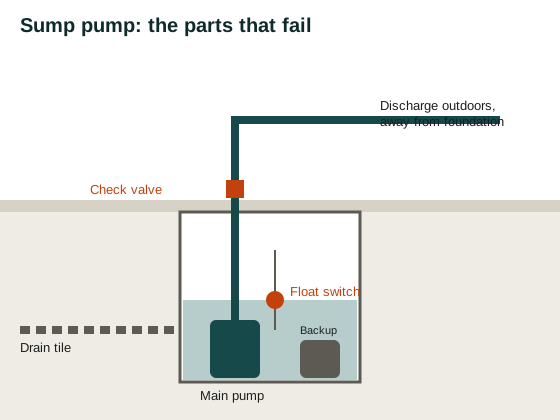
Know the parts
Groundwater flows through drain tile into the pit. When the float rises, the pump pushes water up the discharge pipe, past a check valve, and outside.
Symptoms and fixes
| Symptom | Likely cause | What to do |
|---|---|---|
| Won't turn on | No power, tripped GFCI, stuck float | Reset the outlet or breaker; free the float |
| Runs but doesn't empty the pit | Clogged intake, frozen or blocked discharge, failed impeller | Clear the intake and outdoor line; call if it persists |
| Runs constantly | Jammed float, high water table, undersized pump | Free the float; ask about a larger pump |
| Short-cycles | Failed check valve or float set too tight | Replace the check valve; adjust the float |
| Loud grinding or rattling | Debris in impeller or worn bearings | Unplug, clean; replace if worn |
Test it before storm season
Pour water in
Fill the pit slowly with a bucket until the float lifts.
Watch it run
The pump should start, empty the pit and shut off.
Check outside
Water should discharge well away from the foundation.
Test the backup
Unplug the main pump and repeat to confirm the battery backup runs.
Choosing a replacement pump
Match the pump to the job: a submersible pump is quieter and sits in the pit, while a pedestal pump has its motor above the pit and is easier to service. Look at the horsepower and the flow rating at your vertical lift, not just the maximum flow, since a pump rated for a shallow lift may move far less water from a deep basement. Cast iron housings handle heat from long run times better than plastic.
A battery backup or a water-powered backup keeps the pit dry during power outages, which often happen during the storms that fill the pit. A check valve on the discharge line prevents water from flowing back after each cycle, and a discharge line that extends well away from the foundation keeps the same water from returning. A high-water alarm is inexpensive insurance.
Common questions
Why won't my sump pump turn on?
Usually no power, a tripped GFCI, or a float switch stuck against the pit wall.
Why does my sump pump run all the time?
A jammed float, a high water table after heavy rain, or a pump too small for the inflow.
What does a check valve do on a sump pump?
It stops pumped water from draining back into the pit, preventing rapid cycling.
Why does my sump pump turn on and off every few seconds?
A failed check valve lets water drain back into the pit, or the float is set with too little travel.
What makes a sump pump grind or rattle?
Debris caught in the impeller or worn bearings; unplug it and clean the intake before replacing.
How do I test a sump pump battery backup?
Unplug the main pump, pour water into the pit and confirm the backup starts and empties it.
General information; codes vary by location. See our editorial standards.