
Leak detection
Signs of a slab leak
Updated · Editorial team; not yet technically reviewed
Short answer
Common signs of a slab leak are a water meter that moves when every tap is off, a bill that rises without explanation, a warm spot on the floor (from a hot-water line), damp or buckling flooring, the sound of running water, and new cracks in floors or walls. A meter test confirms a leak; a plumber pinpoints it with acoustic and thermal tools before breaking concrete.
What to look and listen for
- Warm or hot spots on tile or concrete floors.
- Damp carpet, swelling wood floors or mildew smell with no visible source.
- Hissing or running-water sound when nothing is on.
- Water heater running more than usual (hot-side leak).
- Cracks in the slab, baseboards pulling away, or water at the foundation edge.
The meter test
Turn everything off
Every faucet, the irrigation, ice maker and washer.
Read the meter
Note the reading or watch the leak indicator, the small triangle or dial.
Wait
Check again after 30 to 60 minutes without using water.
Interpret
Movement means a leak somewhere; close the house shutoff to see whether it's indoors or on the service line.
Repair choices
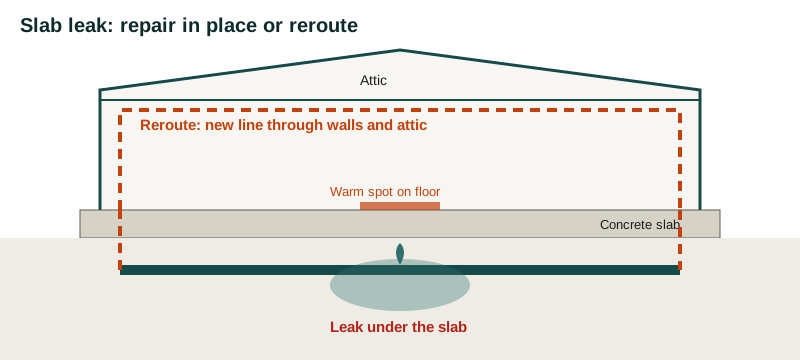
Plumbers locate slab leaks with acoustic listening, thermal imaging and line pressure tests. The fix is either a spot repair through the slab or a reroute through walls or the attic, which avoids the slab entirely; see slab leak repair and leak detection.
Slab leaks and homeowner's insurance
Many homeowner's policies cover sudden water damage from a slab leak, such as soaked flooring, and the cost of accessing the pipe, but not the repair of the pipe itself or damage from a leak that went on for a long time. Policies differ, so read the water damage section or ask your agent. Documenting the date you noticed the warm spot or higher bill, and the plumber's report, helps with any claim.
Shut off the water main if the leak is active and large. Keep the plumber's leak-detection report, photos and invoices together. If you have one slab leak in an older home with copper under the slab, ask whether rerouting the supply lines overhead would be wiser than spot repair, since more leaks in the same pipe are common.
Common questions
What does a slab leak feel like?
Often a warm spot on the floor if it's a hot-water line, or damp flooring with no visible source.
How do I test for a slab leak with my meter?
Turn off all water, read the meter, wait 30 to 60 minutes and check whether it moved.
Why do slab leaks happen?
Corrosion, abrasion where pipes rub concrete, poor installation, and soil movement under the slab.
How do plumbers find a slab leak without breaking the floor?
Acoustic listening, thermal imaging and pressure testing of each line narrow it down first.
Is rerouting better than fixing a slab leak?
Rerouting avoids breaking concrete and future leaks in the same old line; spot repair is cheaper for a single isolated leak.
Can a cold-water line under the slab leak too?
Yes, but without a warm spot; damp flooring, a moving meter and higher bills are the clues.
General information; codes vary by location. See our editorial standards.