
Comparison
Main water line: repair or replace?
Updated · Editorial team; not yet technically reviewed
The verdict
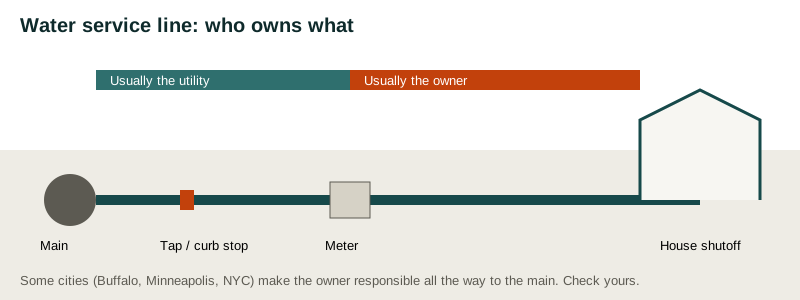
Repair a main water line when it's a newer pipe with one isolated leak. Replace it when the pipe is lead, galvanized or polybutylene, when it has leaked more than once, or when pressure has dropped from scale buildup. Before deciding, confirm which section you own; in some cities it's only meter-to-house, in others it runs all the way to the main.
First: which part is yours?
In most places the utility owns the main and the line up to the meter, and you own the rest. Some cities make owners responsible to the main, including the part under the street; see examples like Buffalo and Minneapolis.
Decision table
| Situation | Usually |
|---|---|
| Copper or PEX, one leak | Repair |
| Lead service line | Replace (and check utility programs) |
| Galvanized with low pressure or rusty water | Replace |
| Polybutylene (gray plastic) | Replace |
| Second leak within a few years | Replace |
Replacement methods
- Open trench along the route.
- Directional boring or pulling new pipe under lawns and driveways.
- Pipe bursting, which pulls new pipe through the old path.
What the plumber checks before recommending either
A good diagnosis starts at the meter: the plumber confirms the leak is on your side by closing the house shutoff and watching the meter, then checks the pipe material where it enters the house. Galvanized steel, lead and early polybutylene lines are usually replaced rather than patched, because a repair on one spot leaves the rest of the aging pipe in place. Copper and modern plastic lines with a single break from a dig or a frost heave are good repair candidates.
Ask for the reasoning in writing: the pipe material, the depth and length of the run, whether the leak is at a fitting or in the pipe wall, and whether the utility or city requires an upgrade such as a larger line or lead removal when the line is disturbed. Ask whether the price includes restoring the driveway, sidewalk or lawn, and who pulls the permit. Two estimates that describe the same scope are easy to compare; two that don't usually mean one plumber found something the other missed.
If the line is shared with a neighbor or crosses another property, ask the utility how responsibility is split before work starts; shared lines are common in older neighborhoods and complicate both repair and replacement.
Common questions
How long does a main water line last?
It depends on material: copper and plastic can last many decades; galvanized often corrodes sooner.
Can a lead service line be repaired?
Partial repairs can disturb lead; many states and utilities require or fund full replacement instead.
Why replace a galvanized water line that isn't leaking?
Interior rust narrows it, lowering pressure and discoloring water, and leaks tend to follow.
Does replacing my side of a lead line help if the utility side is lead?
Partial replacement can disturb lead; coordinate so both sides are replaced together.
Who pays for a water line under the street?
It depends on the city; check whether your responsibility ends at the meter or the main.
Does a new water line need a permit?
Generally yes, plus coordination with the water utility.
General information; codes vary by location. See our editorial standards.