
Sewer problems
How a sewer camera inspection works
Updated · Editorial team; not yet technically reviewed
Short answer
A plumber pushes a waterproof camera on a flexible rod into the sewer line, usually through a cleanout, and watches a live feed as it travels toward the street. A counter shows distance and a locator pinpoints the camera head from the surface, so any roots, sags, offset joints or breaks can be found and marked before anyone digs.
What happens during the inspection
Access
Through an outdoor cleanout, a roof vent or by pulling a toilet.
Run the camera
The rod is pushed toward the main while the plumber records video.
Locate
A transmitter in the head lets the plumber mark the problem's position and depth on the ground.
Report
You get the video and the findings: what, where and how deep.
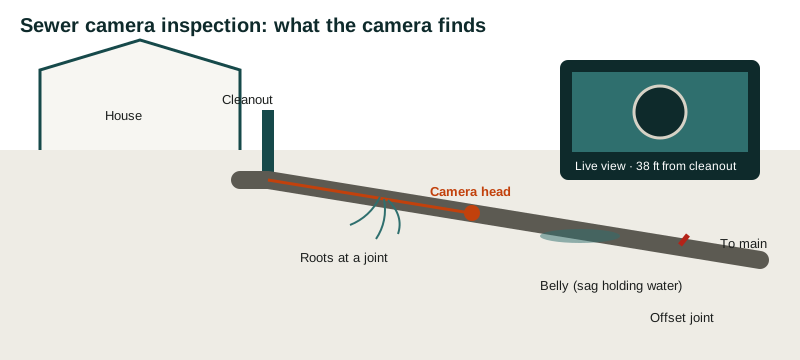
Common findings and what they mean
| Finding | What it means | Usual next step |
|---|---|---|
| Roots at joints | Roots entering through gaps | Cut or jet; lining or replacement if widespread |
| Belly (standing water) | A sag where waste settles | Monitor, or excavate and re-grade |
| Offset joint | Sections shifted out of line | Spot repair or lining |
| Crack or break | Structural damage | Spot repair or replacement |
| Scale or grease | Buildup narrowing the pipe | Jetting or descaling |
When it's worth it
- Before buying an older home.
- When clogs keep coming back.
- Before agreeing to a sewer replacement quote.
- After a backup, to confirm the cause.
What to ask for with the inspection
Ask for the video file, not just a summary; it lets a second plumber review the findings and helps you compare repair quotes. Good reports include footage with distance markings, the location and depth of problem spots, and the pipe material. Many plumbers can mark the surface above a defect with a locator, so you know exactly where repairs would happen and whether they'd fall under a driveway, tree or the street.
An inspection doesn't fix anything. If the line is full of debris, the plumber may need to clean it first to see clearly, so ask whether cleaning is included. Before buying a home built before about 1980, an inspection is worth considering, since repairs to the lateral are usually the owner's responsibility and aren't covered by standard home inspections or most homeowner's policies.
Common questions
How does a plumber mark where a sewer problem is?
A transmitter in the camera head is found from the surface with a locator, giving position and depth to mark on the ground.
Do I need a cleanout for a sewer camera inspection?
It's the easiest access, but plumbers can also go through a roof vent or a toilet flange.
Can a sewer camera see through a clogged line?
Not through a full blockage; the line is often cleared first so the camera can pass.
What is a belly in a sewer pipe?
A sag where water and waste collect instead of draining, often from soil settling.
Should I get the video of my sewer inspection?
Yes. It lets you get second opinions and compare quotes.
What does an offset joint look like on camera?
A visible step or ledge where one pipe section has shifted out of line with the next.
General information; codes vary by location. See our editorial standards.