
Water quality
Lead service lines: how to check yours and who pays to replace it
Updated · Editorial team; not yet technically reviewed
Short answer
A lead service line is the pipe that brings water from the main in the street into your home, made of lead. You can usually spot one where it enters the house before the meter: lead is dull gray, soft and scratches to a shiny silver. Who pays to replace it depends on your water system: some cities replace both sides for free, others share the cost or offer loans, and federal rules now require water systems to replace most lead lines over the next decade.
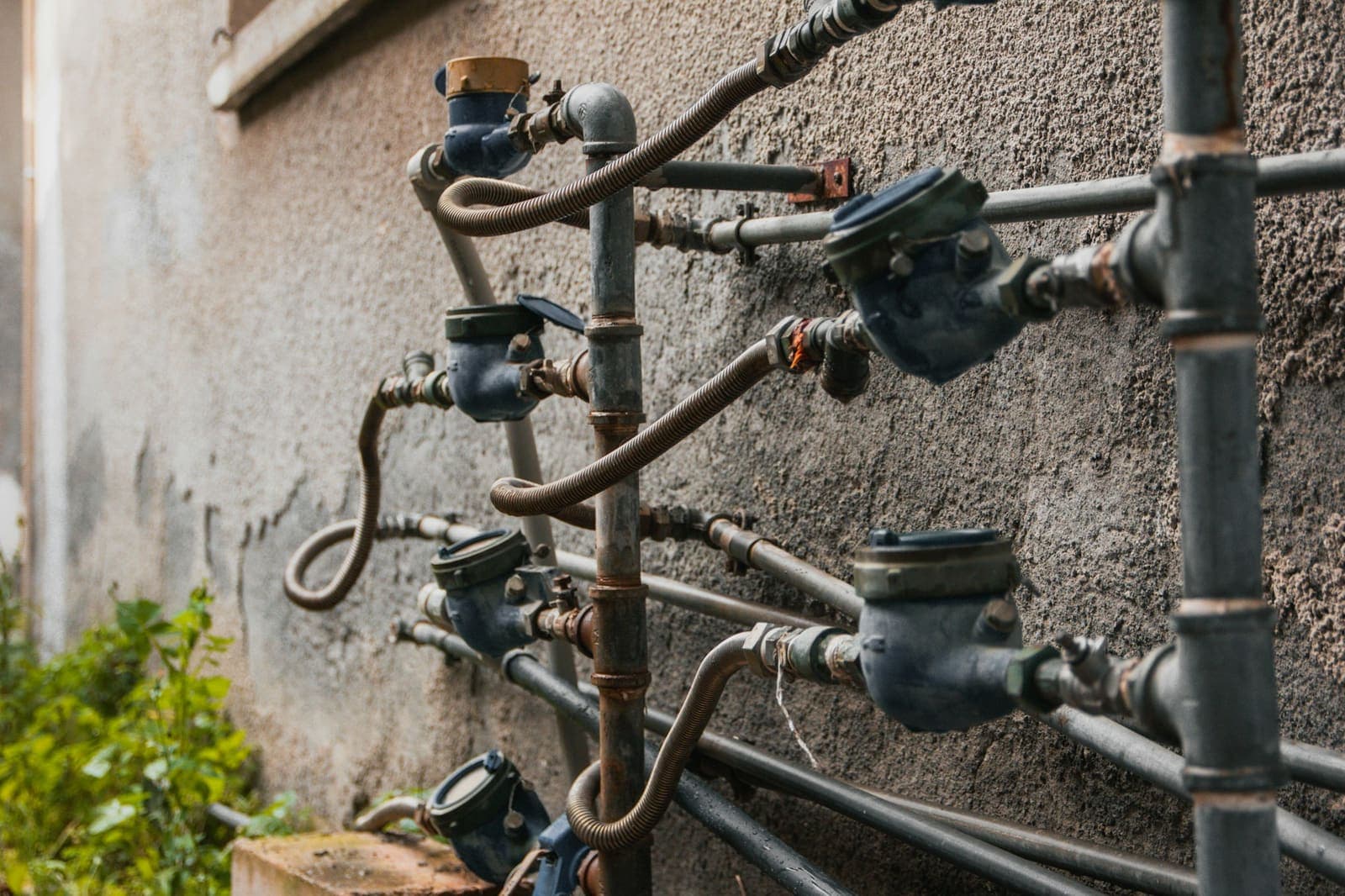
How to check your service line
Find the pipe
Look where the water line comes through the foundation wall or floor, just before the meter or main shutoff, usually in a basement, crawl space or utility closet.
Scratch test
Gently scratch the pipe with a key or coin. Lead is soft, dull gray and scratches to shiny silver. Copper is penny-colored. Galvanized steel is gray, hard, and a magnet sticks to it. Plastic is white, black or blue.
Check your utility's inventory
Water systems were required to publish service line inventories, so look up your address on your utility's site. Many lines are listed as unknown, so your own check still helps.
Consider the home's age
Lead service lines are most common in homes built before the mid-1980s, when lead pipe was banned for new drinking water plumbing.
Why the whole line should be replaced at once
A service line often has two owners: the utility owns the part from the main to the curb, and the property owner owns the part from the curb to the house. Replacing only one side can disturb the lead that remains and leave lead joined to new copper, which can raise lead levels for a time. That's why many states and cities now require full replacement, and why partial replacements are banned in places like Michigan and New Jersey.
Who pays: how cities differ
| City | How the private side is handled |
|---|---|
| Boston | Free inspection and free replacement if lead |
| Chicago | Free for income-qualified owners and for breaks or leaks; permit fees waived if you hire a contractor |
| Cincinnati | Water Works covers the full cost to the meter |
| Cleveland | Free when the city side is disturbed; galvanized downstream of lead also free |
| Denver | Replaced at no direct cost, with filters until six months after |
| Detroit | Replaced at no cost; state law bans partial replacement |
| Milwaukee | Full replacement required on triggers; homeowner share eliminated |
| Philadelphia | Owner's responsibility; free during main work and in a ZIP-code pilot; 0% HELP loans |
| Pittsburgh | Free for income-qualified customers; reimbursement if you hire a plumber |
| St. Louis | Owner pays for now; grants and a 0% loan being developed |
What federal rules require
The U.S. EPA's Lead and Copper Rule Improvements, finalized in October 2024, require most community water systems to replace lead and certain galvanized service lines within 10 years, and to keep a public inventory of service line materials. How each system pays for the private side, and how fast your street is reached, still varies, which is why local programs matter.
Reducing lead exposure until it's replaced
- Use only cold water for drinking, cooking and baby formula.
- Run the tap after water has sat for several hours.
- Use a filter certified to NSF/ANSI 53 for lead reduction; see water filtration systems.
- Clean faucet aerators regularly.
- Flush thoroughly after any work on your service line or nearby water mains.
When you need a plumber
Call a licensed plumber if your service line is leaking, if you're paying for a private replacement, or if interior plumbing needs work after a new line goes in. Our water line repair page covers leak signs, trenchless options and what a replacement involves.
Common questions
Why were lead pipes used for water lines?
Lead is soft, easy to bend around obstacles and long-lasting, so it was widely used for service lines. The 1986 Safe Drinking Water Act amendments banned lead pipe in new drinking water plumbing.
How can I tell if my water pipe is lead?
Scratch the pipe where it enters the house: lead is soft, dull gray and turns shiny silver when scratched, and a magnet won't stick to it.
Is galvanized pipe the same as lead?
No, but galvanized pipe that was downstream of lead can collect lead and release it, so federal rules and many cities treat it as needing replacement.
Should I test my water for lead?
Testing is a good idea if you have or might have a lead line. Many utilities offer free or low-cost test kits; collect the first water drawn after it has sat for several hours, since that shows the highest likely level.
Can I replace only my side of a lead service line?
It's best not to. Replacing one side can disturb the remaining lead and raise levels for a while, so coordinate with your water utility to replace the whole line. Michigan and New Jersey ban partial replacements outright.
Will my utility tell me if I have a lead line?
Water systems must keep a public inventory and notify customers with lead or unknown lines, but records can be incomplete, so checking the pipe yourself helps.
General information; codes vary by location. See our editorial standards.