
Comparison
Copper vs. PEX
Updated · Editorial team; not yet technically reviewed
The verdict
For most repipes and new supply lines, PEX costs less and installs faster because it bends around corners with fewer fittings, and it tolerates freezing better. Copper is still the better choice for exposed runs, outdoor and sun-exposed sections, and right at the water heater connections. Very aggressive water can pit copper; PEX doesn't corrode.
Side by side
| Copper | PEX | |
|---|---|---|
| Material cost | Higher | Lower |
| Labor | Soldered or press fittings at every turn | Long flexible runs, fewer joints |
| Freezing | Can split | Expands somewhat, more forgiving |
| Sunlight | Unaffected | Degrades in UV; keep covered |
| Water chemistry | Can pit in aggressive water | Doesn't corrode |
| Heat at the water heater | Fine | Keep a short metal connector at the heater |
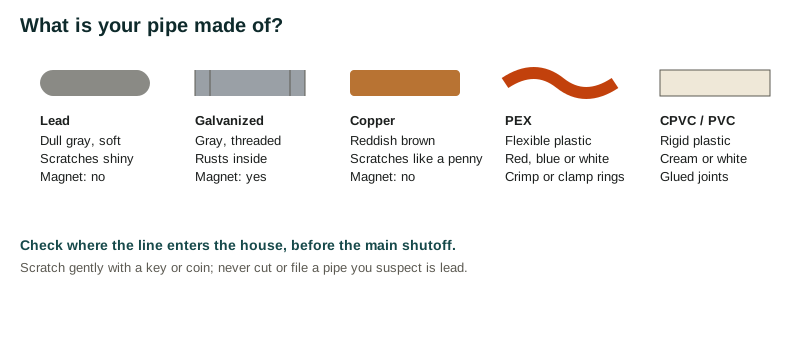
What do you have now?
If your house still has galvanized supply pipe, either choice is a big upgrade; see when to repipe a house.
What drives the cost of each
- Number of fixtures and the distance between them.
- How many walls and ceilings must be opened and patched.
- Copper market prices, which move more than plastic pipe prices.
- Fittings: PEX uses fewer, copper needs one at nearly every turn.
- Local code requirements for supports, protection and inspections.
We don't publish prices; they vary by market. Get a written quote first.
Our recommendation
- Whole-house repipe in finished walls: PEX.
- Exposed basement runs you want to last and look neat: copper or PEX with proper supports.
- Outdoor, sunny or attic runs near heat: copper, or PEX fully protected.
Mixing copper and PEX in the same house
Many homes end up with both: copper mains with PEX added during a remodel, or PEX branches replacing failed copper. That's normal, as long as transitions use fittings rated for both materials and the work follows the local code. A plumber will also check that the electrical system isn't relying on metal water pipe for grounding, because replacing a section of copper with PEX can break that path; an electrician can add a jumper or a separate ground.
PEX should be kept away from direct sunlight and the hottest few inches of pipe on the water heater, and away from contact with petroleum products. Copper should be watched for pinhole leaks if your water is aggressive or very hard. When only part of a system is failing, replacing that section is often reasonable; when failures are spread through the house, a full repipe in one material usually costs less over time than repeated spot repairs.
Common questions
Does PEX last as long as copper?
Both are long-lived when installed correctly; PEX is newer, so real-world records are shorter.
Can PEX be used outside?
Only if protected from sunlight, which degrades it.
Is PEX safe for drinking water?
Yes, PEX sold for potable water is certified to drinking water standards.
Why do some plumbers prefer copper?
It handles heat and UV, looks neat on exposed runs, and has a long track record.
Can copper and PEX be connected?
Yes, with the proper transition fittings.
Do rodents chew PEX?
They can chew plastic pipe in accessible areas; protect exposed runs where rodents are a problem.
General information; codes vary by location. See our editorial standards.