
Winter plumbing
How to thaw frozen pipes safely
Updated · Editorial team; not yet technically reviewed
Short answer
Open the faucet the frozen pipe feeds, then warm the pipe gradually, starting nearest the faucet and working back toward the frozen section, using a hair dryer, a heating pad, warm towels or a space heater kept a safe distance away. Never use an open flame, and call a plumber if you can't find or reach the frozen spot or the pipe has split.
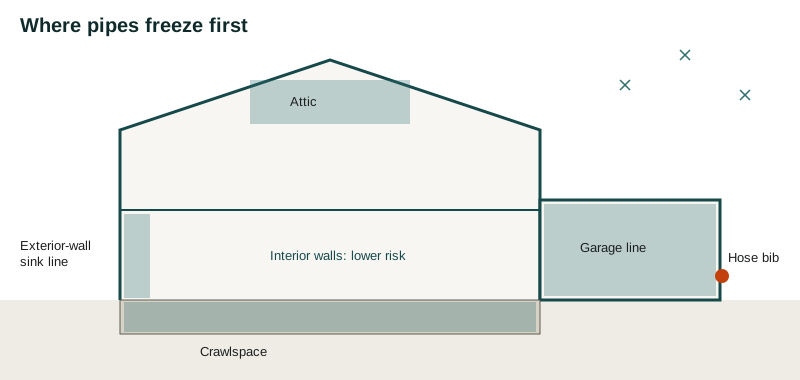
Finding the frozen section
If one faucet has no water and others work, the freeze is on that faucet's line, usually where it runs through an exterior wall, crawlspace, garage or attic. If no faucet works, the freeze may be near where the main enters the house, or the service line itself is frozen.
Safe ways to thaw
- A hair dryer moved along the pipe, starting at the faucet end.
- An electric heating pad or towels soaked in hot water wrapped around the pipe.
- A space heater warming the room or cabinet, kept away from anything flammable and never left unattended.
- Opening cabinet doors and raising the thermostat to warm interior-wall lines.
What never to use
No torches, propane heaters, charcoal or any open flame: they start fires inside walls and can boil water in the pipe until it bursts. Don't use electrical devices standing in water. The U.S. Consumer Product Safety Commission and the Red Cross both warn against open flames for thawing.
Once water flows
Leave the faucet dripping and watch for leaks for an hour; a pipe that froze may have cracked, and the leak only shows once it thaws. Insulate the section or add heat cable rated for pipes. If it split, see frozen pipe repair.
Preventing the next freeze
The pipe that froze once will freeze again under the same conditions, so fix the reason it froze. Common fixes are insulating the pipe and the cavity around it, sealing air leaks near sill plates and foundation vents, and rerouting lines away from exterior walls during remodeling. Heat cable rated for pipes, installed per the instructions, protects stretches that can't be moved.
During a cold snap, open cabinet doors under sinks on exterior walls, let a faucet drip at a slow trickle on the coldest nights, and keep the thermostat steady, even overnight. If you travel in winter, set the heat no lower than about 55°F and consider shutting off the main and draining the lines. Know where the main shutoff is before you need it.
Common questions
Should I open the faucet while thawing a frozen pipe?
Yes. An open faucet relieves pressure and lets melting water flow, which speeds thawing.
Where should I start warming a frozen pipe?
At the faucet end, working back toward the frozen section, so melting water can escape.
Can I use a torch to thaw a pipe?
No. Open flames start fires in walls and can overheat the pipe until it bursts.
How long does it take to thaw a frozen pipe?
Often 30 minutes to a few hours with a hair dryer or heater, depending on how much is frozen and how accessible it is.
What if no faucet in the house works?
The freeze is likely near the main or in the service line; call a plumber or your utility.
Why check for leaks after the water comes back?
Ice can crack a pipe without leaking until it thaws, so a split only shows once water flows.
When should I call a plumber for a frozen pipe?
When you can't find or reach the frozen section, nothing works, or the pipe has split.
General information; codes vary by location. See our editorial standards.