
Comparison
Hydro jetting vs. snaking a drain
Updated · Editorial team; not yet technically reviewed
The verdict
A drain snake (cable) punches through or grabs a blockage and is the right first tool for most single clogs. Hydro jetting scours the whole pipe wall with high-pressure water, which removes grease, scale and fine roots that a cable leaves behind, so it suits lines that keep clogging. Jetting old, cracked pipe can do damage, so a camera inspection should come first on older sewer lines.
Side by side
| Drain snaking | Hydro jetting | |
|---|---|---|
| How it works | Rotating cable cuts or hooks the clog | Water at high pressure scours the pipe wall |
| Best for | Single clogs: hair, wipes, a toy, a soft blockage | Grease, scale, sludge, fine roots, repeat clogs |
| What's left behind | Buildup on the pipe walls | A cleaner pipe interior |
| Risk to old pipe | Low | Higher on cracked, collapsed or badly corroded pipe |
| Usual cost | Lower | Higher |
How a jetter cleans
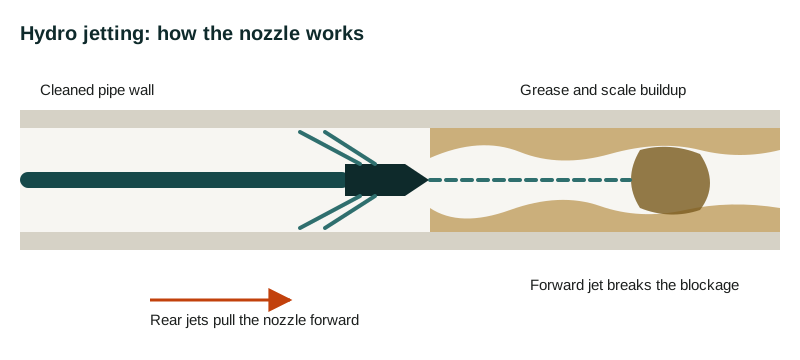
The nozzle's rear-facing jets pull the hose forward while blasting the pipe wall; on the way back, the water flushes debris downstream. Different nozzles cut roots or break up hardened grease.
Which to choose
- First clog in years: snaking.
- Kitchen line that clogs every few months: jetting, plus keeping grease out.
- Main line with roots: cable to open it, camera to see the damage, then jetting or repair.
- Old clay, Orangeburg or cast iron with visible cracks: camera first; lining or repair may be the real fix.
Before a jetting or snaking visit
Locate and clear access to the sewer cleanout, usually a capped pipe outside near the foundation or in the basement; if there isn't one, the plumber may need to pull a toilet or install a cleanout, which adds time and cost. Note which drains are slow, when the problem started and whether it happens after laundry or heavy rain. These clues tell the plumber whether the clog is in a branch or the main line.
Ask whether a camera inspection is included or recommended after clearing; it shows whether the cause was grease, roots or a broken pipe, which determines whether the problem will return. Older, fragile pipe such as Orangeburg or badly corroded cast iron may not tolerate high-pressure jetting, so a responsible plumber cameras those lines first. Expect the plumber to protect floors and to run water afterward to confirm full flow.
Common questions
What does a hydro jetter leave behind that a snake doesn't?
Very little; a cable opens a path but leaves buildup on the walls, which jetting scours off.
Which nozzle does a plumber use for roots?
A root-cutting or rotating nozzle; other nozzles are used for grease and general flushing.
Does snaking remove tree roots?
A cutting head can open a root-blocked line, but roots regrow; jetting clears more and a camera shows the entry points.
How often should a drain be jetted?
Only when buildup causes problems; lines with heavy grease or roots may need it every year or two.
Should a kitchen line be snaked or jetted?
Grease-coated kitchen lines usually stay clear longer after jetting.
Can I rent a jetter?
Small units exist, but high-pressure jetting of sewer lines is best left to a plumber who can see the pipe condition.
General information; codes vary by location. See our editorial standards.