
California · statewide
Water heater replacement in California: strapping, permits and the sale certification
Updated · Editorial team; not yet technically reviewed
Short answer
California law requires every new, replacement and existing residential water heater to be braced, anchored or strapped against earthquake motion. Straps go in the upper and lower thirds of the tank, with the lower strap at least 4 inches above the controls, and anyone selling a home must certify in writing that the heater complies.
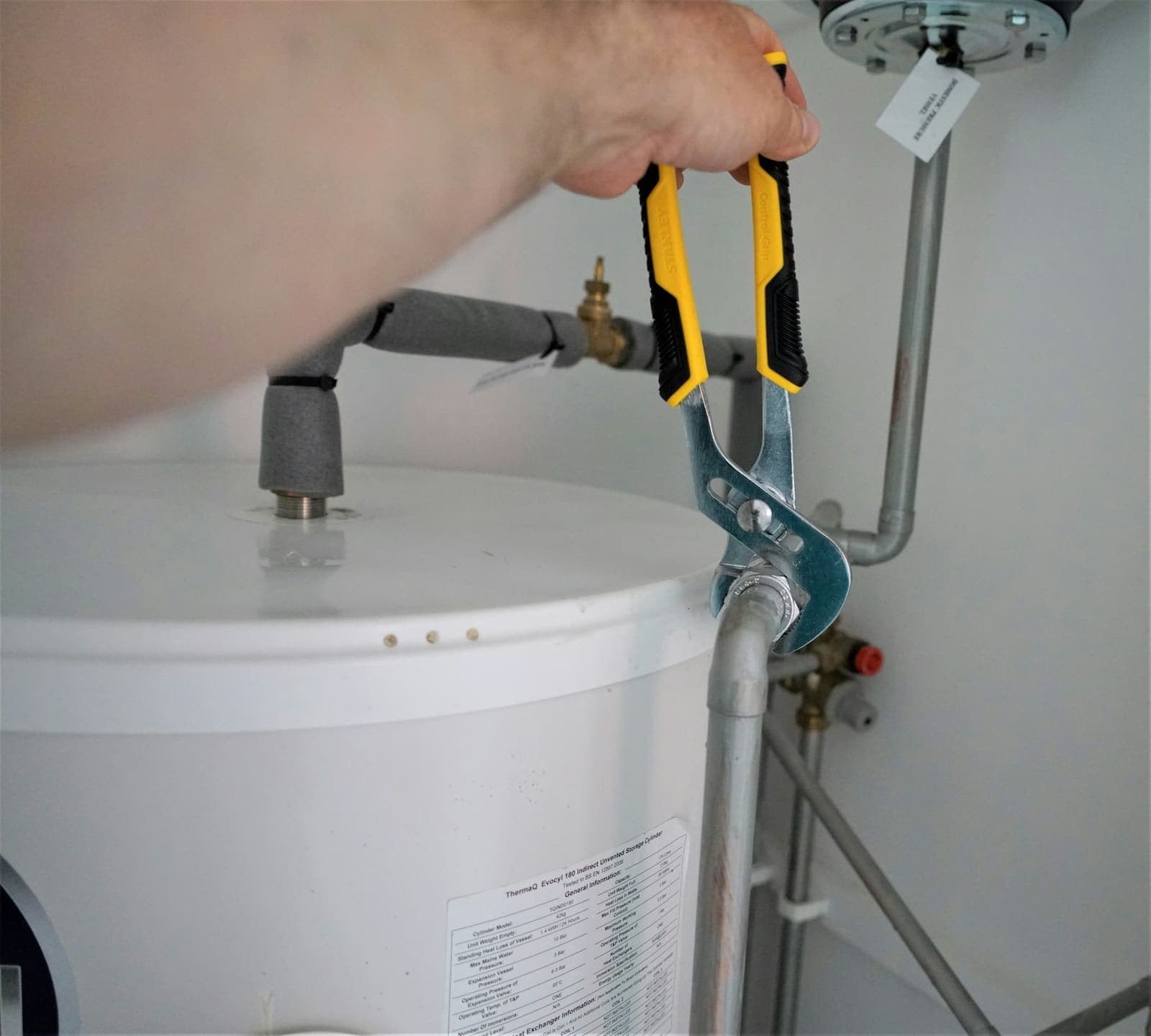
What California requires or changes
All new and replacement water heaters, and all existing residential water heaters, must be braced, anchored or strapped to resist falling or horizontal displacement from earthquake motion. [1]
At minimum, strapping goes within the upper one-third and lower one-third of the heater's height, and the lower strap must stay at least 4 inches above the controls. [1]
The rule covers standard water heaters up to 120 gallons for which a pre-engineered strapping kit is readily available. [1]
A seller of real property with a water heater must certify in writing to the buyer that the heater complies; the certification can go in existing transaction documents. [1]
Why California treats a loose tank as a hazard
A full 50-gallon tank weighs several hundred pounds. In a quake it can walk or topple, tearing the gas connector or the water lines. A broken gas line next to a pilot flame is a fire risk, and a torn water line floods the house just when shutoffs are hard to reach. That's why the state applies the rule to existing heaters too, not only new installs.
What a replacement inspection usually looks at
| Item | What the inspector wants to see |
|---|---|
| Seismic straps | Two straps, upper and lower thirds, lower strap 4+ inches above controls, anchored into studs or masonry |
| Gas connector | Flexible connector and a shutoff valve; sediment trap where the code requires it |
| Temperature and pressure relief valve | Discharge line running to an approved location, not capped or reduced |
| Venting (gas units) | Correct vent size and slope, with clearances to combustibles |
| Expansion tank | Where the water system is closed (for example, a check valve or pressure regulator at the meter) |
Switching to tankless
A wall-hung tankless unit is fastened to the wall by design, but the gas line often needs upsizing and the venting changes completely. Plan the permit around those changes rather than the straps. See tankless water heaters for what the swap involves.
Common questions
Does California law apply to a water heater that's already installed?
Yes. Health and Safety Code §19211 covers existing residential water heaters as well as new and replacement units.
Where do the earthquake straps go on a California water heater?
Within the upper third and lower third of the tank's height, with the lower strap at least 4 inches above the controls.
What does a California seller have to tell a buyer about the water heater?
The seller must certify in writing that the heater is braced, anchored or strapped as the law requires.
Is a 120-gallon or larger tank covered by the strapping law?
The law's definition covers standard heaters up to 120 gallons with a pre-engineered strapping kit available; larger units are anchored to engineered or code requirements.
Can a city in California require more than the state strapping rule?
Yes. Heaters must meet the California Plumbing Code as modified by the local city or county.
Why is a falling water heater dangerous in an earthquake?
It can tear the gas connector and water lines, creating a fire risk and flooding at the same time.
What else gets inspected when a California water heater is replaced?
Usually the gas connector and shutoff, relief valve discharge, venting, and an expansion tank where the system is closed.
Do California homeowners need a permit to swap a water heater?
Local building departments generally require one; check your city or county, and see the Los Angeles water heater page for one city's process.
Do straps matter for an electric water heater?
Yes. The law isn't limited to gas units; an electric tank can still fall and break water lines.
How long does a California water heater replacement take?
Most straight swaps take a few hours; a move to tankless or a new location takes longer because of gas and vent work.
Water Heater Replacement across California
- Water Heater Replacement in Los AngelesReplacing a water heater in Los Angeles: the LADBS permit, California's earthquake strapping rule, where the straps go, and what inspectors check.
- Toilet Installation in CaliforniaCalifornia's fixture law for pre-1994 homes: when a remodel permit triggers toilet replacement, the 2017 deadline and seller disclosure.
- Backflow Testing in CaliforniaCalifornia backflow testing under the State Water Board's cross-connection handbook: in effect since July 2024, annual tests, and what homes need.
- Water Heater Replacement: the full guideWhen to replace a water heater instead of repairing it, how tank, tankless and heat pump models compare, and what a proper install includes.
- Plumbing in CaliforniaCalifornia's plumbing code, licensing, climate and the cities we cover.
The same service in other states
Sources (1)
- California Health and Safety Code §19211 · checked 2026-10-03