
Plumbing service
Outdoor faucet and hose bib repair
Short answer
Outdoor faucets (hose bibs or sillcocks) most often drip from a worn washer, leak at the handle packing, or split inside the wall after freezing. A frost-free sillcock places the valve inside the heated house to prevent freezing, but only if it slopes to drain and the hose is disconnected in winter.
Updated · Editorial team; not yet technically reviewed
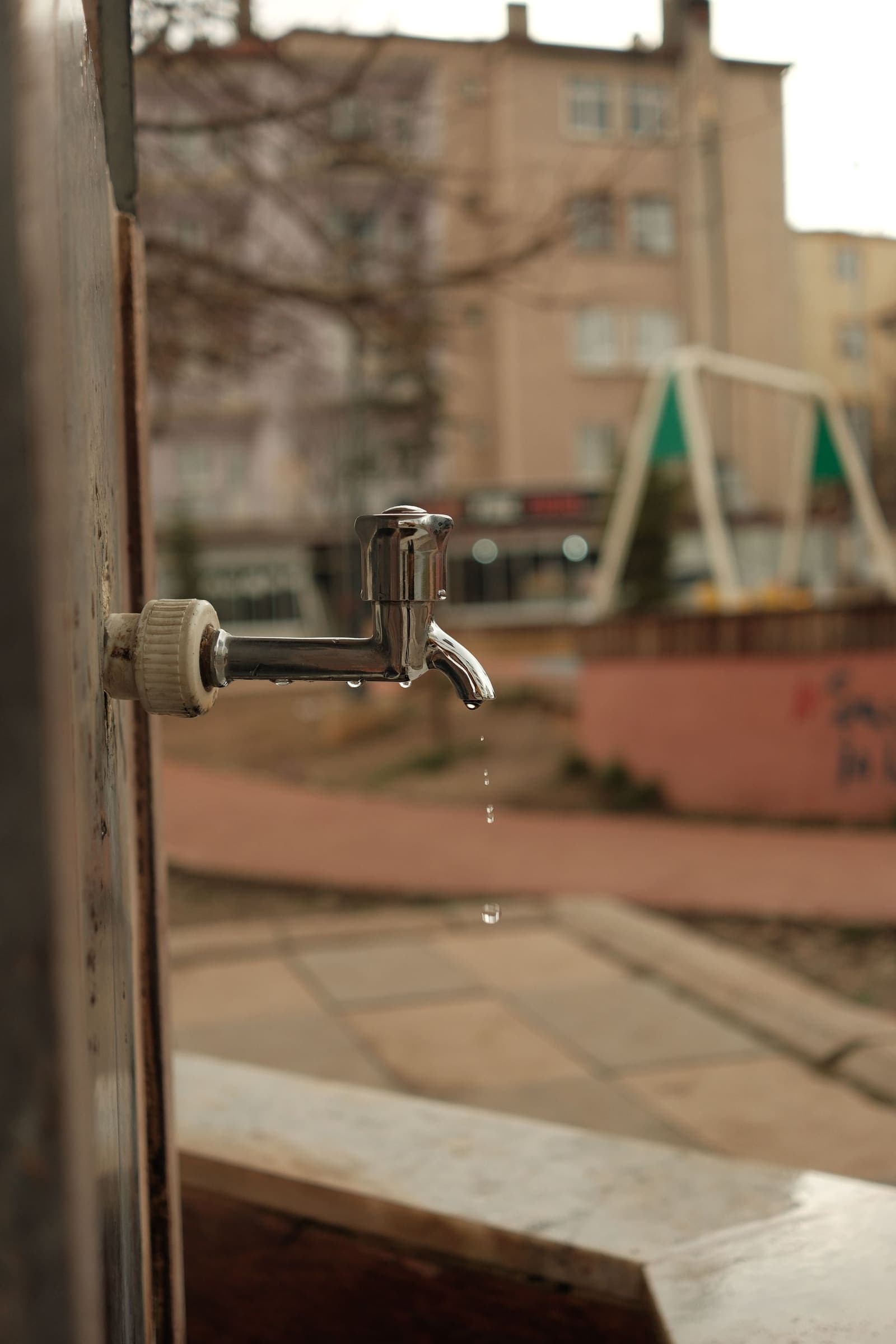
Outdoor Faucet and Hose Bib Repair at a glance
- Drips at the spout
- Worn washer or seat.
- Leaks at the handle
- Packing nut loose or packing worn.
- Leaks inside the wall in spring
- Frozen and split pipe, even on frost-free models.
- Code
- Vacuum breakers on hose connections prevent backflow.
How frost-free faucets work
A frost-free sillcock has a long stem, so the valve that actually shuts off water sits several inches inside the wall, in heated space. When closed, the tube between the valve and the spout drains out. If a hose is left connected, water can't drain, freezes in the tube, and splits it. The leak often shows up only when the faucet is first used in spring, sometimes inside a wall or basement ceiling.
Winterizing outdoor faucets
Disconnect hoses
Before the first hard freeze.
Shut off and drain
For standard hose bibs, close the interior shutoff valve and open the outside faucet to drain it.
Insulate
An insulated faucet cover adds protection in colder areas.
Test in spring
Open the faucet and check inside for leaks the first time you use it.
Repairs
- Replace the washer or the stem assembly for drips.
- Tighten or repack the packing nut for handle leaks.
- Replace a split frost-free sillcock with one of the correct length, installed with a slight downward slope toward the outside.
- Add or replace a vacuum breaker on the spout.
Finding a split frost-free faucet
A frost-free faucet that froze with a hose attached often splits inside the wall, where you can't see it. The giveaway comes in spring: the faucet works, but when it's turned on, water appears inside the basement or crawl space, or runs down the siding below it. Turn it off immediately and close the inside shutoff for that line if there is one.
Repair means replacing the whole faucet body, which reaches back through the wall. A plumber matches the length so the valve seat sits inside the heated space again, and pitches it slightly downward so it drains.
- Vacuum breakers: many codes require backflow protection on hose connections so dirty water can't be pulled back into the house supply. Replacement faucets usually include it.
- Leaking at the handle: usually a worn packing or stem washer; a simple repair on most models.
What affects the cost
- A simple washer or packing repair vs. replacing the whole faucet
- Frost-free sillcock length and the wall thickness it has to pass through
- Access from inside: finished basement ceilings or walls may need opening
- Drying and repairing water damage from a split pipe
- Adding an interior shutoff valve if there isn't one
We don't publish prices; they vary by market. Get a written quote first.
Common questions
Should I replace a standard hose bib with a frost-free one?
In areas with freezing winters, a frost-free sillcock installed with the correct slope is a common upgrade. Remember to disconnect hoses in winter, since a connected hose defeats the design.
Why is my frost-free spigot leaking inside the wall?
It most likely froze and split, often because a hose was left connected. The sillcock needs to be replaced and any wet wall materials dried.
Do I need to shut off frost-free faucets in winter?
Disconnecting the hose is the key step. In very cold climates, some homeowners also close the interior valve as extra protection.